

Article: Why Do Some Hair Toppers Look Bulky Near the Hairline?
Why Do Some Hair Toppers Look Bulky Near the Hairline?
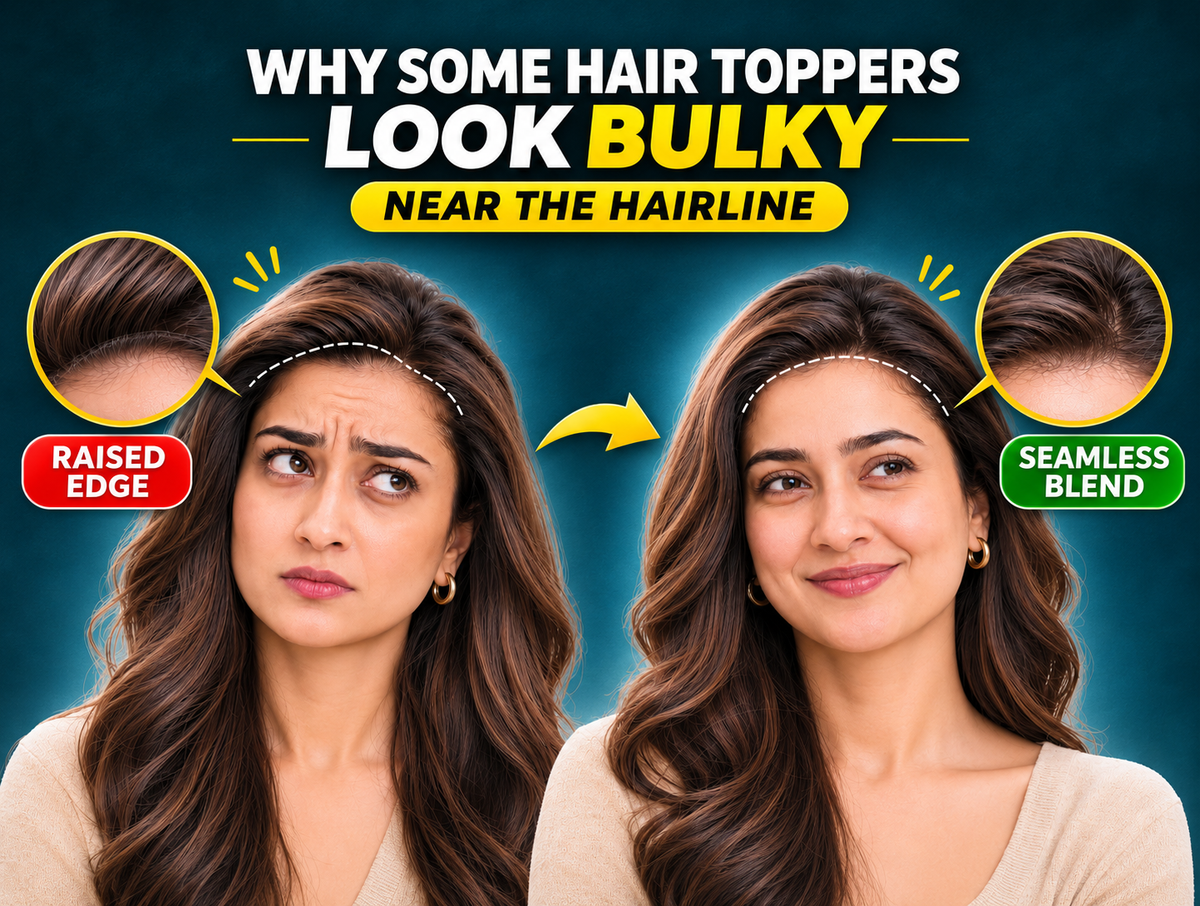
Hair toppers are designed to provide coverage and fullness in areas where natural hair has become thin, particularly around the parting and crown. However, some women notice that their hair topper appears slightly raised, thick, or bulky near the front hairline. Instead of blending smoothly with their natural hair, the topper may create an uneven transition or make the front section appear fuller than expected.
A bulky hairline does not always mean that the hair topper is unsuitable. Its appearance can be influenced by several factors, including base construction, hair density, placement, and the way the topper blends with existing hair. Understanding these details can help you identify why a hair topper looks bulky and what adjustments may create a flatter, more natural appearance.
| Table of Content |
Why Hair Toppers Sometimes Look Bulky at the Front
A hair topper is a partial hairpiece designed to cover specific areas of thinning hair while blending with the surrounding natural hair. It typically consists of a base that holds the hair strands and an attachment system that keeps the topper positioned on the head. The front hairline is one of the most noticeable areas because it frames the face and creates the transition between natural hair and the additional coverage. Even a small amount of extra height or thickness in this area may affect how naturally the topper sits.
When a topper appears bulky, the issue is often related to how its structure interacts with the natural shape of the head. For example, a base that does not follow the scalp's contour may lift slightly at the front. Similarly, excessive hair density near the front edge can create a rounded appearance rather than a gradual transition. Women experiencing thinning around the crown or parting may also have less natural hair available to conceal the topper's front edge. In these situations, the construction and positioning of the hairpiece become particularly important.
It is also useful to distinguish between natural volume and unwanted bulk. A topper can add noticeable fullness without looking raised at the attachment area. Bulkiness generally becomes a concern when the base, hair roots, or front edge creates a visible separation from the surrounding hair.
Common Reasons Behind a Bulky Hair Topper Hairline
Several factors can contribute to a hair topper appearing thicker near the forehead. These factors may occur independently or together, depending on the topper's design and the wearer's natural hair characteristics.
A Thick or Raised Base
The base forms the foundation of the hair topper. Some base constructions include multiple layers of material, which may create additional thickness. If the front edge is relatively thick or does not lie close to the scalp, it can form a noticeable ridge. This is particularly visible when the surrounding natural hair is fine or has limited volume. The effect also depends on how the edge is finished and whether it is designed to remain concealed beneath natural hair.
Excessive Hair Density Near the Front
Hair density refers to the amount of hair distributed across the topper's base. A topper with substantial density can create fullness around the crown, but the same concentration of hair near the hairline may appear too heavy. Natural hairlines generally have a softer transition between the forehead and the thicker hair farther back. When a topper has a dense, uniform front section, this gradual transition may be less visible.
Incorrect Base Size
The base must correspond to the area requiring coverage and the shape of the head. A base that is too large may extend into areas where additional coverage is unnecessary. If it has excess material, it may wrinkle or sit unevenly. A base that is too small may also cause difficulties, particularly when it must be positioned awkwardly to conceal thinning areas. This can make the front edge more noticeable.
Uneven Natural Hair Beneath the Topper
The hair underneath a topper influences how smoothly the base rests against the head. If natural hair is gathered unevenly, has considerable root volume, or creates small bumps beneath the attachment points, the topper may sit higher than intended. The result can resemble excessive topper density even when the actual issue is the underlying hair.
Visible Attachment Points
Clips positioned near the front can sometimes create small areas of elevation. This may happen when clips are attached over thick sections of hair, positioned at an unsuitable angle, or placed where the base cannot rest comfortably. A secure attachment should not require excessive tension or create persistent discomfort.
How Topper Base Construction Affects the Hairline Appearance
Base construction influences how naturally a hair topper sits near the hairline. The material, thickness, and flexibility of the base affect how smoothly it follows the scalp and blends with natural hair.
Skin Hair Toppers
Skin hair toppers use a skin-like base designed to create a natural scalp appearance. Depending on the construction, the base may sit smoothly with a discreet front edge. However, if the base is too thick, poorly fitted, or incorrectly positioned, it may create visible bulk near the hairline. Proper density and placement are equally important for a natural finish.
Silk Hair Toppers
Silk hair toppers feature a layered base that conceals hair knots and creates a realistic scalp appearance along the parting. While this construction offers a natural-looking parting, the additional layers may create thickness near the front. Incorrect placement or excessive root volume can make the hairline appear raised.
Skin vs. Silk Hair Toppers: What Changes at the Front?
| Feature | Skin Hair Topper | Silk Hair Topper |
| Base construction | Skin-like material | Layered silk construction |
| Scalp appearance | Natural-looking scalp surface | Concealed knots and realistic parting |
| Front-edge appearance | Depends on base thickness and fit | Depends on layering and placement |
| Natural blending | Influenced by density and styling |
Both types can create a natural-looking hairline when properly fitted. The key factors are base construction, appropriate hair density, and correct placement.
Why Hair Density and Placement Matter for a Natural Look
Even a well-constructed hair topper can appear bulky if its density, placement, or hair direction does not match your natural hair. Excessive volume near the forehead may create an uneven transition, making the topper more noticeable. Women with fine or thinning hair may experience this when the topper has significantly more volume than their existing hair. Understanding how these factors affect the overall appearance can help achieve a smoother, more natural-looking hairline.
- Excessive density near the front can create unwanted bulk. Balanced density helps the topper blend with natural hair.
- Positioning the topper too far forward may expose its base. Proper placement helps create a smoother hairline.
- Hair that lifts excessively at the roots can appear bulky. Matching the natural hair direction improves blending.
A natural-looking hair topper should provide sufficient coverage without creating unnecessary fullness around the forehead. Choosing appropriate density, positioning the base correctly, and maintaining a consistent hair direction can help reduce visible bulk. These small details contribute to a flatter, more balanced appearance that blends naturally with your existing hairstyle.
How to Make a Hair Topper Sit Flatter and Blend Naturally
When a hair topper looks bulky near the hairline, a few simple adjustments can help improve its appearance. Extra height at the front may result from uneven natural hair, incorrect placement, or excessive density. Identifying the cause before making changes helps prevent unnecessary adjustments to the topper. Proper positioning and gentle styling can create a smoother transition between the topper and your existing hair, making the overall appearance more natural.
Here are some practical ways to reduce bulkiness:
- Start with clean, dry, detangled hair. Smooth the hair underneath to prevent bumps and help the topper sit evenly.
- Position the topper according to its design. Placing it correctly can help conceal the front edge and reduce visible bulk.
- Attach the clips gently while keeping the base flat. Avoid excessive pulling or tension that may cause discomfort.
- Gently combine your natural hair with the topper hair. Matching the parting, texture, and hair direction creates a smoother transition.
-
Excessive fullness near the front may make the topper appear raised. Professional customization can help balance the density when appropriate.
- Examine the hairline from different angles in daylight. This helps identify visible edges, uneven placement, or excess volume.
Achieving a flatter hair topper hairline often depends on small adjustments rather than major changes. Preparing the natural hair, positioning the base correctly, and blending the front sections can noticeably improve the appearance. If bulkiness remains despite proper placement, the topper's base construction or density may need professional assessment. A balanced fit helps the topper sit comfortably while maintaining a natural-looking finish.
What to Consider When Choosing a Natural-Looking Hair Topper
Choosing a hair topper that matches your natural hair can help prevent unnecessary bulk near the hairline. The topper should provide appropriate coverage for thinning areas while sitting comfortably against the scalp. Base size, hair density, and construction all influence how smoothly it blends with existing hair.
- A flexible base follows the scalp's shape and helps prevent raised edges.
- Balanced density creates natural fullness without excessive volume.
- Matching your natural texture helps achieve seamless blending.
- A realistic parting complements your hairstyle.
- Properly placed clips provide security without excessive tension.
- A suitable edge design helps reduce visible bulk near the hairline.
For women with thinning hair near the forehead, choosing the right front-edge construction is particularly important. A topper should offer sufficient coverage without creating noticeable thickness or discomfort. When base design, hair density, and placement complement your natural hair, the result is a smoother, more balanced appearance.
Frequently Asked Questions
Why does my hair topper look bulky at the front?
A hair topper may look bulky because of a thick base, excessive front density, incorrect placement, or uneven natural hair underneath. Checking whether the base sits flat can help identify the cause before making styling adjustments.
How can I make my hair topper lay flat?
Start by smoothing your natural hair, aligning the topper correctly, and securing the clips evenly without pulling. If the front remains raised, the base size, construction, or attachment positioning may need to be reassessed.
Are silk hair toppers thicker than skin hair toppers?
Silk hair toppers commonly use layered construction, which can create additional thickness compared with certain skin-base designs. However, actual thickness varies between products, and either type can look natural when appropriately fitted.
Can excessive hair density make a topper look unnatural?
Yes. When the topper has substantially more hair than the surrounding natural hair, the front and crown may appear disproportionately full. Choosing a compatible density and ensuring a gradual blend can improve the overall appearance.
Should a hair topper sit directly on the front hairline?
Not necessarily. Many conventional toppers are designed to sit slightly behind the natural hairline so existing hair can conceal the front edge. Other designs may be intended for more forward coverage, so placement should follow the topper's construction and the wearer's needs.
Can a bulky hair topper be customized?
Some hair toppers can be professionally adjusted through careful cutting, layering, or other suitable modifications. However, changing density or altering the base may not be appropriate for every construction, so the source of the bulk should be identified first.
Conclusion
A bulky hair topper hairline can result from several interacting factors, including base thickness, excessive density, incorrect placement, and uneven blending with natural hair. Understanding these differences makes it easier to determine whether the appearance can be improved through positioning and styling or whether the topper's construction requires closer attention.
A natural-looking result comes from balance rather than simply adding more coverage. When the base follows the shape of the head, the density complements the existing hair, and the front edge blends smoothly, a hair topper can provide fullness without creating unnecessary height around the hairline.
Not sure where to begin with hair loss solutions? 📞+91 9967123333 Contact us now, and let our experts recommend the ideal choice for you. Personalized advice is just a call away!
Hair thinning on top? Feeling conscious in photos or at work?
You’re not alone — and we’re here to help.
👉 [Fill this form and get guidance on choosing the right topper.]
Read more
What Are the Most Common Wig Myths Women Should Stop Believing?
Wigs have become a versatile hair solution for women who want to change their hairstyle, add fullness, or manage visible hair loss. Yet, despite improvements in wig construction, styling, and custo...
Read moreneed help?


Leave a comment
This site is protected by hCaptcha and the hCaptcha Privacy Policy and Terms of Service apply.