

Hair Toppers for Women with Sensitive Scalps: What Really Works
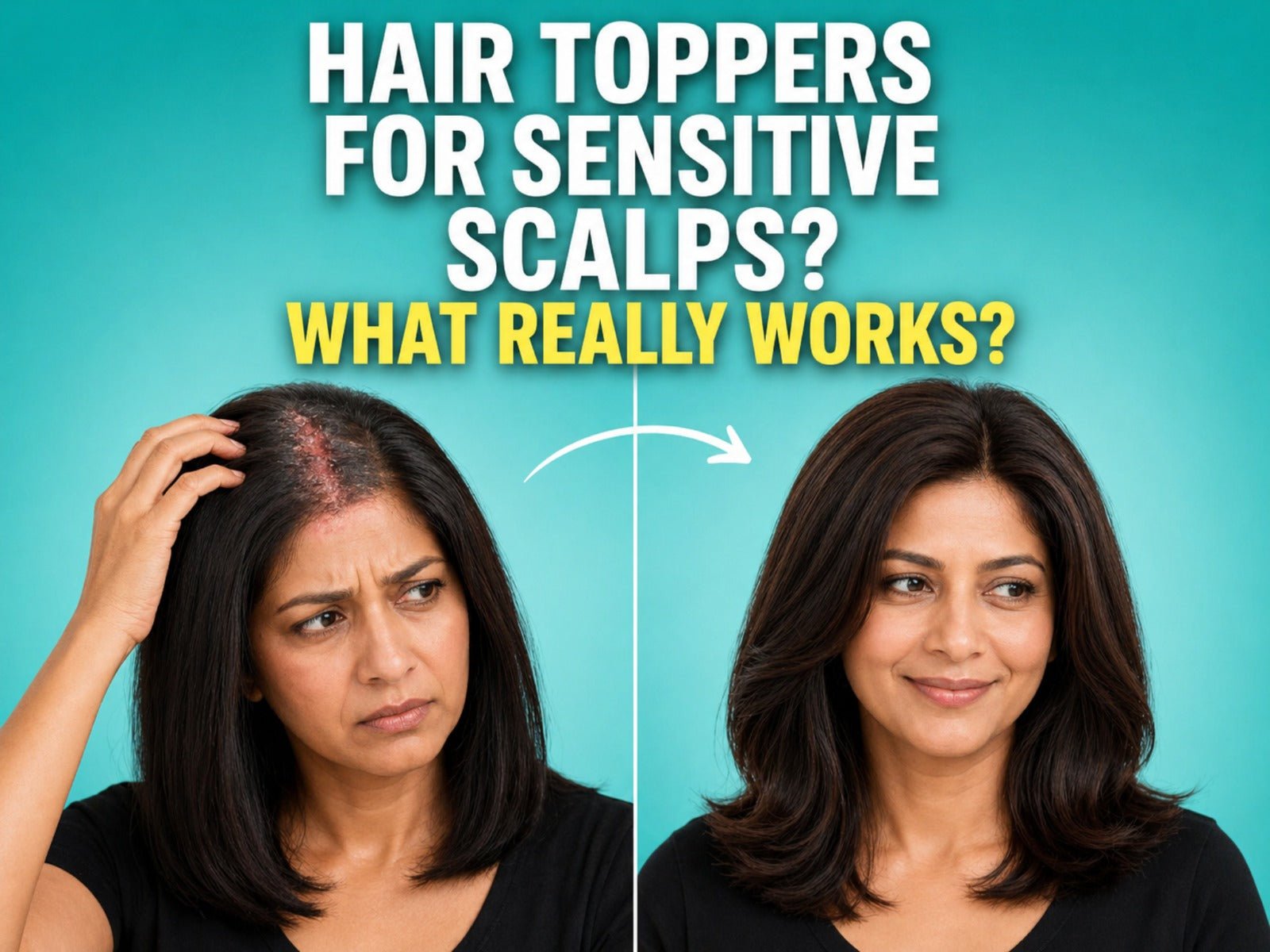
Choosing a hair topper is not only about adding volume. For many women, it comes after months or years of thinning hair, widening parting, low crown density, or treatments that did not give the expected result. When the scalp is sensitive, the decision becomes more personal because comfort matters as much as appearance.
You may wonder if the topper will look natural, feel heavy, or pull your natural hair. These concerns are valid. The right topper should feel lightweight, secure, soft on the scalp, and easy to wear without making you conscious.
Sensitive Scalp Concerns
A sensitive scalp can make simple styling uncomfortable. Tight ponytails, heavy clips, rough brushing, or strong hair products may cause irritation, pulling, or pressure. So, if you are already experiencing thinning hair, it is natural to worry whether a topper will add more stress.
A sensitive scalp does not mean you cannot wear a topper. It simply means the topper must be selected carefully. The base, size, clips, density, and fitting should all be chosen according to your comfort and thinning pattern.
Key points:
- Choose a topper that feels lightweight and does not create pressure.
- Avoid heavy density because it can pull on weak hair.
- Avoid heavy density because it can pull on weak hair.
- Get proper fitting so the clips do not sit on sensitive areas.
Why Comfort Matters
Many women first look for a natural parting and fuller crown. While appearance matters, comfort should never be ignored. If a topper feels tight or painful, you will not wear it confidently.
Comfort usually depends on weight, base size, clip placement, hair density, and base material. The goal is not to wear the biggest or thickest topper. The goal is to get fuller-looking hair that feels easy, secure, and natural in daily life.
Comfort depends on:
- Weight: Lightweight toppers are better for long wear.
- Base size: The base should cover your thinning area without being too large.
- Density: Natural density looks more real and feels lighter.
- Clip placement: Correct placement reduces pulling and scalp pressure.
Best Topper Base Types
The base of a hair topper plays a major role in comfort and appearance. For sensitive scalps, base selection is especially important because the base sits closest to the scalp.
There are three common topper base types: silk base, skin base, and lace base. Each one has its own benefit, and the best option depends on your scalp sensitivity, lifestyle, thinning pattern, and styling preference.
| Topper Base Type | What It Looks Like | Best For | Comfort for Sensitive Scalp | Keep in Mind |
|---|---|---|---|---|
| Silk Base | Natural scalp-like parting because knots are hidden under the silk layer | Wide parting, visible scalp, crown thinning, and premium finish | Comfortable when fitted well, but slightly thicker than lace | Best for realistic top view, but may feel less breathable in humidity |
| Skin Base | Smooth, clean, scalp-like finish that sits close to the head | Sleek coverage, medium crown thinning, and neat top appearance | Comfortable if the base is lightweight and flexible | Thicker skin bases may feel warm for women who sweat easily |
| Lace Base | Light, airy, and breathable base structure | Daily wear, airflow, and less pressure on the scalp | Very good because it is usually lighter and breathable | Parting may need customization to look as natural as silk |
| Customized Base | Designed according to thinning area, sensitivity, and lifestyle | Women who need comfort, coverage, and natural blending together | Best when chosen with expert guidance | Proper fitting, color matching, and haircut blending are important |
Main points:
- Silk base is best for a realistic scalp-like parting.
- Skin base gives a smooth and clean top finish.
- Lace base is helpful for lightness and breathability.
- Customized base selection is best when comfort and natural look both matter.
Clip Safety
One of the biggest questions women ask is, “Will topper clips damage my natural hair?” This fear is real, especially when the natural hair is already thin or weak. The honest answer is that clips can be safe when the topper is lightweight, correctly sized, and fitted properly.
Problems usually happen when the topper is too heavy, clips are too tight, or clips sit on weak hair areas. A topper should feel secure, not painful.
To make clips safer:
- Choose a lightweight topper that does not pull heavily.
- Avoid clipping too tightly near weak or thinning areas.
- Remove the topper gently by opening every clip slowly.
- Avoid sleeping with clip-in toppers to protect your natural hair.
Crown Thinning Coverage
Most women choose hair toppers because of thinning on the crown, top, or parting area. This type of hair loss can feel very visible under lights, in photos, during video calls, and in everyday conversations. A topper helps by adding coverage exactly where it is needed.
The best topper should not look too thick or artificial. It should make your existing hair look fuller, softer, and balanced.
For natural crown coverage:
- Select the right base size according to your thinning area.
- Choose natural density instead of very heavy volume.
- Match the topper color with your natural hair shade.
- Blend the haircut so the topper does not look separate.
Daily Wear Comfort
Some women wear toppers only for weddings, events, or special occasions. Others want to wear them daily for work, meetings, travel, and regular routines. If you plan to wear a topper every day, comfort becomes even more important.
A daily wear topper should be easy to apply, comfortable for long hours, secure but not tight, and simple to style. Once it is fitted and blended properly, it should slowly feel like part of your routine.
Daily wear tips:
- Put the topper on gently without pulling your hair.
- Avoid over-tight clipping because it can create pressure.
- Remove it at home when you do not need it.
- Store it properly after use to maintain shape and avoid tangling.
Mistakes to Avoid
Many women buy toppers when they are emotionally tired of hair thinning. They want a quick solution, which is understandable. But rushing the decision can lead to discomfort, poor blending, or an unnatural result.
A topper is not just a product. It is a wearable hair solution that should match your hair loss pattern, scalp sensitivity, natural hair color, haircut, lifestyle, and comfort needs.
Common mistakes:
- Choosing a topper only by looking at online photos.
- Buying too much density, which can look fake and feel heavy.
- Ignoring base type, breathability, and clip placement.
- Skipping professional color matching and haircut blending.
Topper Care Routine
A topper that is cared for properly looks better, lasts longer, and feels more comfortable. For sensitive scalps, hygiene and gentle handling are very important. If the base collects sweat, oil, or product buildup, it may start feeling uncomfortable.
Care does not need to be complicated. A simple routine of gentle brushing, correct washing, proper storage, and careful removal can protect both the topper and your natural hair.
Care tips:
- Keep the base clean to avoid sweat and oil buildup.
- Brush gently from the ends first, then move upward.
- Avoid heavy styling products that make the topper greasy.
- Remove the topper slowly instead of pulling it off quickly.
Frequently Asked Questions
Are hair toppers good for sensitive scalps?
Yes, hair toppers can work well for sensitive scalps when they are lightweight, correctly sized, and properly fitted. The base and clip placement should be selected carefully so the topper does not create pulling, pressure, or irritation.
Which topper is best for a sensitive scalp?
There is no single best topper for every woman. Silk base is good for a natural-looking parting, lace base is better for breathability, and skin base gives a smooth scalp-like finish.
Will topper clips hurt?
Clips should not hurt when placed correctly. If they feel painful, tight, or uncomfortable, the topper may need adjustment in size, clip placement, or weight.
Can topper clips damage natural hair?
Clips usually do not damage natural hair when used properly. Damage can happen if the topper is too heavy, removed roughly, or clipped repeatedly on fragile hair areas.
Conclusion
Hair toppers for women with sensitive scalps can work beautifully when chosen correctly. The right topper should feel lightweight, secure, and comfortable while blending naturally with your existing hair. It should cover crown thinning, wide parting, or visible scalp without pulling, heaviness, or irritation.
At Alchemane, our specialists help you choose a topper based on your scalp sensitivity, thinning pattern, comfort level, lifestyle, and natural look. You do not have to figure it out alone.
Let us simplify your hair loss journey! 📞+91 9967123333 Call us now for a consultation, and our specialists will guide you toward the ideal solution for you.
Worried a topper will look fake or feel heavy? We get it. That’s why we customize our advice based on your needs.👉 [Click here to get topper suggestions just for you.]
Read more
Wearing a Wig for the First Time? A Complete Guide to What to Expect
Wearing a wig for the first time is rarely just about appearance. For many women, it comes at a moment of change, whether due to hair thinning, medical treatment, or sudden hair loss. While you may...
Read more
Crown Hair Thinning vs. Widening Part: Know the Difference
For many women, hair thinning starts slowly. First, the parting looks wider. Then, the scalp becomes more visible under bright light or in photos. Over time, the top of the head may start looking l...
Read moreneed help?


Leave a comment
This site is protected by hCaptcha and the hCaptcha Privacy Policy and Terms of Service apply.