

How to Choose the Right Hair Topper for Crown Thinning
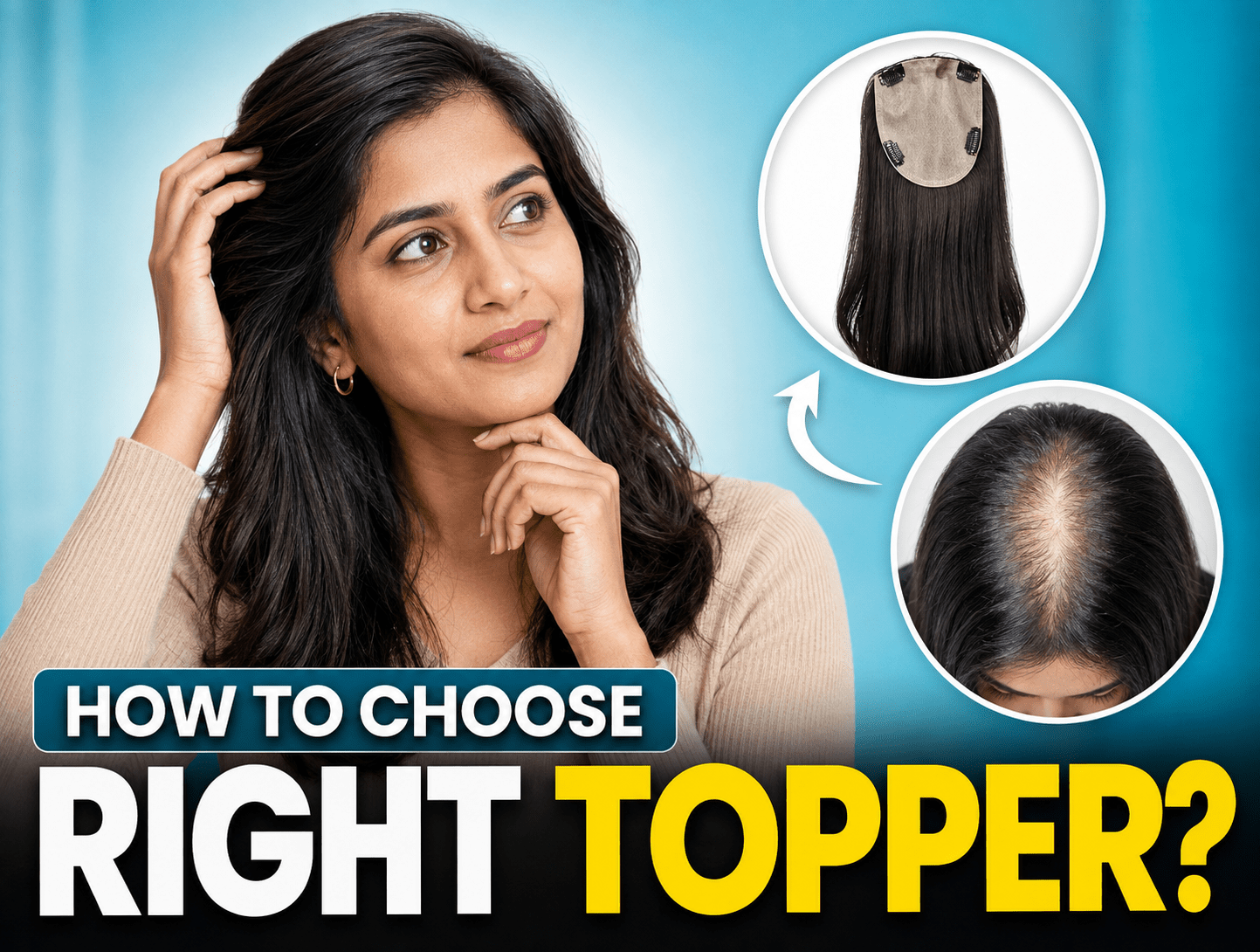
Crown thinning can appear in different ways. For some women, it is limited to the crown, while for others it spreads across the parting and top of the scalp.
That is why choosing the right topper is not about finding the thickest or most expensive option. The right hair topper for crown thinning should suit your coverage needs, natural hair density, scalp visibility, and lifestyle.
Understanding these factors first makes it much easier to choose a topper that looks natural and blends with your existing hair.
|
Table of Contents |
|
Understanding Crown Thinning |
|
Choosing the Right Base, Size & Density |
|
Making Your Topper Blend Naturally |
|
Comfort, Clips & Lifestyle |
|
Checking the Final Fit |
|
Frequently Asked Questions |
Understanding Crown Thinning Before Choosing a Topper
Before comparing different topper materials or styles, first understand how much area actually needs coverage.
Crown thinning can look very different from one woman to another. Some may have a small visible patch at the crown, while others experience thinning across the parting and a wider section of the top. Because of this, the same topper size will not work for everyone.
What should you look at?
- Mild thinning: A smaller topper may be enough to reduce scalp visibility and restore some volume.
- Moderate thinning: A wider base may be needed to cover the crown and blend properly with the surrounding hair.
- Wider top thinning: More coverage may be required, especially when the hair around the crown has also become weak or sparse.
A common mistake is choosing a topper based only on the most visible thin spot. Ideally, the base should extend slightly beyond that area so it can sit securely on stronger surrounding hair.
At the same time, bigger is not always better. An unnecessarily large topper can add extra weight and make the top look fuller than the sides and back.
The goal is appropriate coverage, not maximum coverage. If standard topper sizes do not suit your thinning pattern, a customised size may provide a better fit.
Choosing the Right Base, Size, and Density
Once you understand your thinning pattern, the next step is choosing the topper construction. This is where base size, base material, density, and comfort need to work together.
Even a topper made with high-quality hair can look unnatural if the base is too small, the density is too high, or the construction does not suit the wearer.
What should you consider?
-
Base size:
The base determines how much of the thinning area is covered. Limited crown thinning may only need a smaller base, while wider thinning may require more coverage. It should also allow the topper to sit securely on suitable surrounding hair.
-
Hair density:
Density refers to the amount of hair on the topper. A larger base does not automatically require more density. If your own hair is fine, an extremely dense topper can make the top look noticeably heavier than the sides and back.
-
Silk base:
Silk hair toppers are often chosen when a realistic-looking scalp and parting are important. Their construction can create the appearance of hair emerging naturally from the scalp.
-
Skin base:
Skin hair toppers use a thin base designed to resemble the scalp and sit close to the head. They can provide a flatter, smoother appearance with less bulk at the top.
-
Weight and comfort:
If you plan to wear the topper for several hours at a time, it should provide enough coverage without feeling unnecessarily heavy.
The important thing is not to select each feature separately. A wider thinning area may require a larger base but only moderate density. Similarly, the lightest topper is not necessarily the best choice if it does not provide enough coverage or security.
The right topper is about balance: enough coverage to conceal the thinning, enough density to restore fullness, and a base that remains natural-looking and comfortable.
How to Make a Hair Topper Blend Naturally With Your Own Hair
Once the thinning area is covered, the next challenge is making the topper look like part of your existing hairstyle.
Factor |
What to Match |
Why It Matters |
Why It Matters |
Match the topper with the density of the hair on the sides and back. |
Too much density can make the top look noticeably heavier than the rest of the hair. |
Colour |
Compare the roots, lengths, highlights, undertones, and grey percentage. | A general shade such as black or brown may still look different once the topper is worn. |
Texture |
Match straightness, wave pattern, strand thickness, and natural movement. | Different textures can make the topper and natural hair look like two separate sections. |
Length |
Choose a length close to your current hairstyle | Small differences can usually be corrected through cutting and layering. |
Parting |
Check the scalp effect, direction of the hair, and density around the part. | The parting is one of the most visible areas when the hair is viewed from above. |
Hair quality |
Good-quality human hair can be cut and styled to work with your natural hair. |
Better styling flexibility makes blending easier, but it cannot compensate for the wrong density or colour. |
Why human hair is often preferred
For women who want maximum styling flexibility, human hair toppers are often preferred because they can be cut and styled much like natural hair.
However, choosing 100% human hair does not automatically guarantee a natural result.
The base, density, colour, texture, fitting, and final haircut still need to be correct. A high-quality topper with poor matching can remain noticeable, while a properly selected and customised topper can blend far more convincingly.
Comfort, Clips, and Choosing a Topper for Your Lifestyle
A topper may look excellent during a consultation but still be the wrong choice if it does not work with your everyday routine.
How often you plan to wear it and how many hours you will keep it on should influence the final selection.
Daily wear vs occasional wear
For occasional events, you may prioritise styling flexibility or additional volume.
For everyday wear, other factors become more important:
- weight
- comfort
- secure attachment
- ease of styling
- maintenance
- stability during normal movement
A topper you wear regularly should fit into your routine without requiring excessive styling or constant adjustment.
Clip placement matters
Many hair toppers use small clips around the base so they can be attached and removed when needed.
However, the clips should ideally sit on stronger surrounding hair. If they repeatedly attach to weak or sparse areas, they may create unnecessary tension or discomfort.
This is why base size and clip placement should be considered together, particularly for women who already have fragile hair around the crown.
Comfort is about the complete fit
A well-fitted topper should sit securely, feel balanced, and allow you to move normally without excessive pulling or shifting.
For daily wear, that practical comfort matters just as much as how the topper looks.
How to Know Whether You Have Chosen the Right Hair Topper
Once the topper is fitted and styled, evaluate it from more than just the front.
Crown thinning is often most visible from above, so the top, sides, back, and parting should all be checked.
Look for:
- Coverage: The thinning area should be covered without visible gaps around the edges.
- Parting: The scalp effect should look believable and not excessively dense.
- Density: The top should blend naturally with the sides and back.
- Colour: Check the shade and undertones in natural daylight.
- Movement: The topper hair and natural hair should move together.
- Fit: The base should sit flat rather than looking raised or bulky.
- Comfort: It should feel secure without excessive pulling or frequent adjustment.
Photos and a 360-degree video can also help you evaluate areas that are difficult to see clearly in a mirror.
Frequently Asked Questions
Q. What size hair topper is best for crown thinning?
A. The right size depends on the actual area of thinning. The base should cover the thinning area properly and extend enough to sit securely on suitable surrounding hair without being unnecessarily large.
Q. Is a silk or skin hair topper better for crown thinning?
Both can work well. Silk bases are often chosen for a realistic-looking scalp and parting, while skin bases can provide a thinner, flatter appearance. The better option depends on your coverage needs, hairstyle, and comfort.
Q. How do I make a hair topper look natural?
A. Focus on matching the topper’s density, colour, texture, and length with your existing hair. The parting should also look realistic, and professional cutting or layering can help create a more seamless blend.
Q. Can I wear a hair topper every day?
A. Yes, many women wear toppers regularly. For daily wear, the topper should feel secure and comfortable and should not place unnecessary tension on weak areas of natural hair.
Q. Can hair extensions help with crown thinning?
A. Hair extensions mainly add length and volume through the mid-lengths and ends. They do not usually cover visible scalp around the crown. If crown coverage is the main concern, a hair topper is generally more suitable. In some cases, a topper and extensions can be combined when both top coverage and additional length or volume are needed.
Q. Can a hair topper work for alopecia?
A. It can in some cases, depending on the extent of hair loss and the strength of the surrounding hair. If there is not enough suitable hair for secure attachment, another hair replacement option may be more appropriate.
Final Thoughts
Choosing the right hair topper for crown thinning comes down to understanding your own hair first.
Consider the size of the thinning area, the density you have lost, the strength of the surrounding hair, your natural colour and texture, and how often you plan to wear the topper.
A good topper should restore fullness without making the top look excessively dense, bulky, or separate from the rest of the hair.
When the coverage, base, density, colour, texture, attachment, and final styling are properly matched, the result can blend naturally with the hair you already have.
Take the first step toward confident hair today! 📞 +91 9967123333 Call us for a personalized consultation and discover the most effective solution for your hair needs.
Not sure what size, base or length you need?
Don’t guess, let us help you get it right the first time.
👉 [Click here to fill the form for personal topper advice.]
Read more
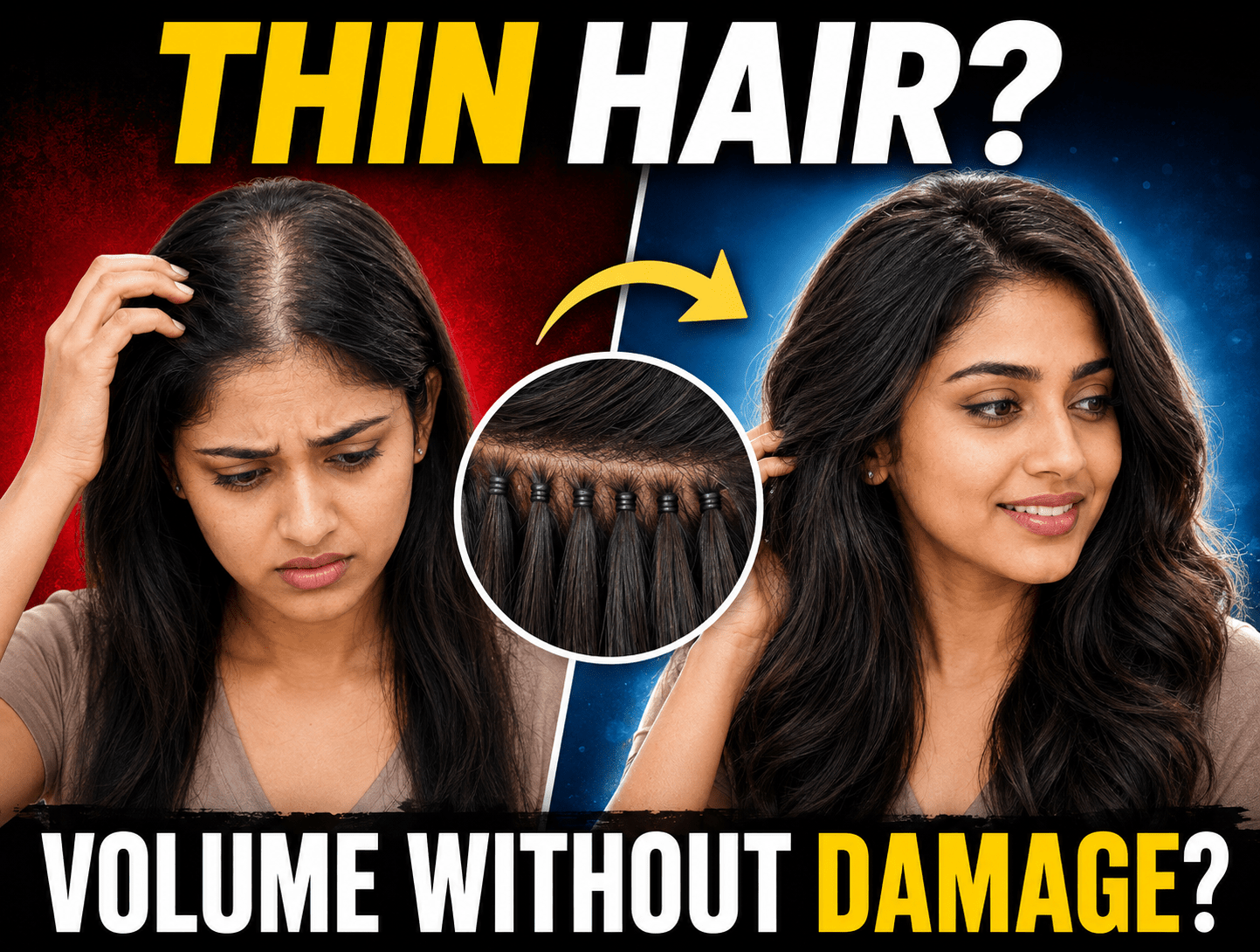
Hair Extensions for Thin Hair: How to Add Volume Without Stressing Your Roots
Thin hair can make your ponytail look smaller, your ends appear sparse and styled volume disappear within a few hours. While clip on's and volumizing products offer temporary results, permanent hai...
Read more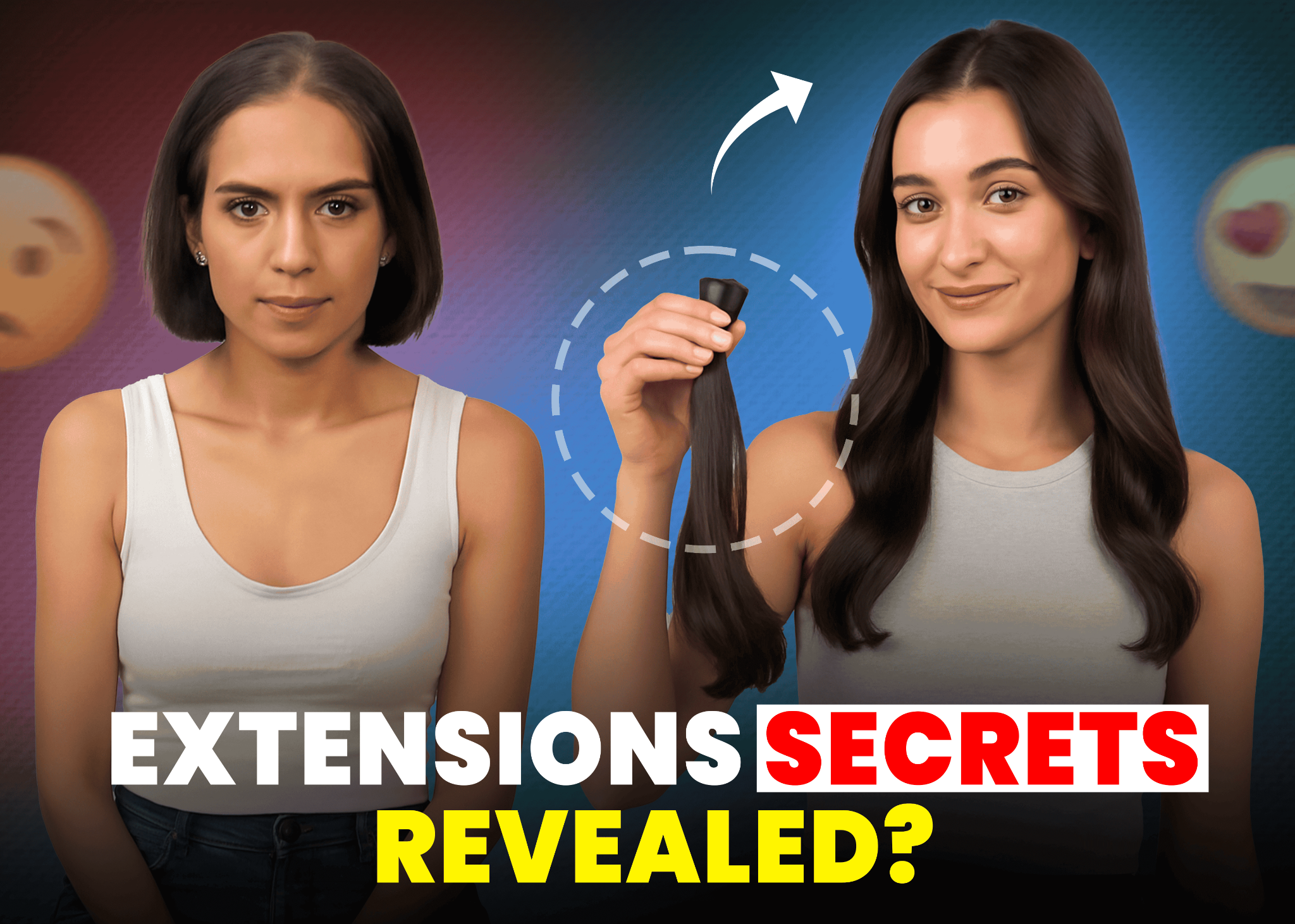
Micro Ring Extensions: How They Work, Who They Suit and How They Are Removed
Micro ring extensions are a popular option for women who want to add length, volume or subtle colour effects without using traditional glue or adhesive strips. The method uses tiny rings to connect...
Read moreneed help?


Leave a comment
This site is protected by hCaptcha and the hCaptcha Privacy Policy and Terms of Service apply.