

Hair Extensions for Thin Hair: How to Add Volume Without Stressing Your Roots
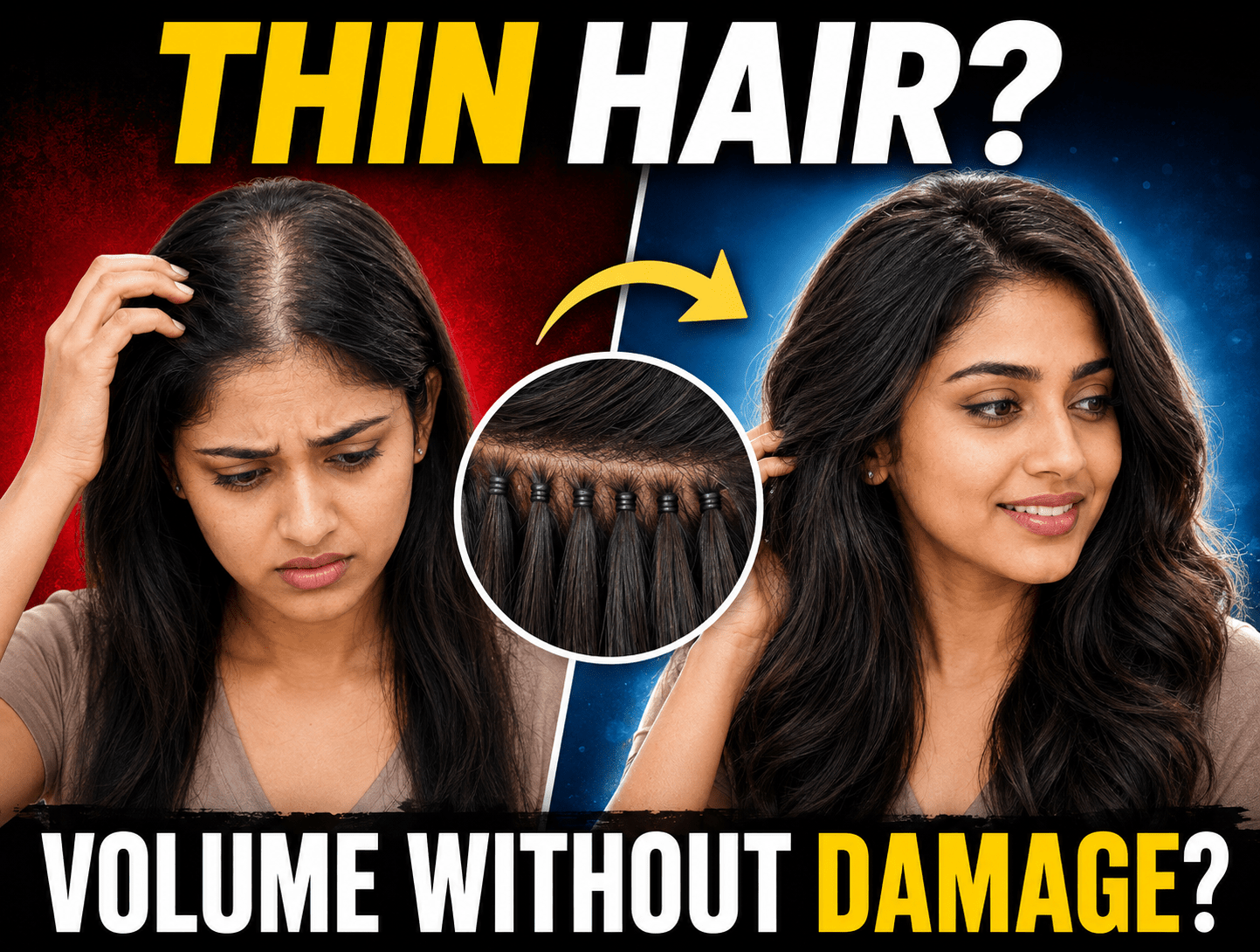
Thin hair can make your ponytail look smaller, your ends appear sparse and styled volume disappear within a few hours.
While clip on's and volumizing products offer temporary results, permanent hair extensions provide a more convenient, long lasting solution. However, thin or fragile hair needs lightweight extensions, careful placement and proper customization.
The goal is not to add the maximum amount of hair. It is to create a natural looking volume that feels comfortable, blends with your existing hair and protects the roots.
|
Table of Contents |
Can Women With Thin Hair Wear Permanent Hair Extensions?
In many cases yes, but only after the natural hair and scalp have been properly assessed.
Naturally fine hair is different from active hair loss. Some women have always had fine strands, while others may experience increased shedding, breakage or reduced density due to stress, hormonal changes or chemical treatments.
Before recommending permanent hair extensions for women, a trained specialist should check:
- Natural hair density and strand strength
- Areas of breakage or active shedding
- Scalp sensitivity
- Previous coloring, bleaching or chemical treatments
- Desired volume and length
- Daily styling habits
- Lifestyle and maintenance expectations
Women with stable, naturally fine hair may be suitable for lightweight, customized extensions. However, sudden shedding, scalp inflammation, bald patches or severe breakage should be medically assessed before getting extensions.
A responsible specialist should always prioritize the health of your natural hair, even if that means delaying the service.
More Extensions Do Not Always Mean Better Results
Adding more extension hair does not automatically create a better transformation.
Too much volume on thin hair can:
- Place unnecessary weight on weak roots
- Create an unnatural difference between thin roots and heavy lengths
- Make the extensions harder to conceal
- Increase discomfort and maintenance
- Make the finished hairstyle look bulky
The aim should be believable fullness, not maximum density.
Some women may want longer hair, while others only need fuller ends, added volume at the back or a thicker looking ponytail. The application should be designed around the client’s natural hair, face shape, lifestyle and preferred hairstyles.
The best transformation is one where people notice that your hair looks fuller and healthier without immediately realizing you are wearing extensions.
Understanding Permanent Hair Extensions
The term permanent hair extensions does not mean the extensions stay attached forever.
It refers to professionally fitted extensions that remain in the hair while sleeping, working, exercising and styling. Unlike clip on's, they do not need to be attached and removed every day.
However, they still require regular maintenance as the natural hair grows. Repositioning is commonly needed every six to eight weeks, depending on the method, hair growth and condition of the natural hair.
Skipping maintenance may lead to tangling, visible attachments or additional pressure on the roots.
Which Extension Method Is Right for Thin Hair?
Extension method |
Best suited for |
Important consideration |
Tape in extensions |
Women who want flat, evenly distributed volume | Requires enough hair to conceal the tapes |
Keratin bond extensions |
Women who want precise placement and customized volume | Bond size and weight must be adjusted for fine hair |
Micro ring extensions |
Women who prefer an adhesive free and reusable option | Requires enough density to support and conceal the rings |
There is no single method that suits every woman. The safest option depends on natural hair density, strand strength, lifestyle, styling preferences and the areas where volume is needed.
Why Extension Weight and Customization Matter
Every extension attachment is supported by a section of natural hair. If the added hair is too heavy, too long or attached to weak strands, it may cause pulling, discomfort and breakage.
A safer application for thin hair may include:
- Fewer and lighter extension pieces
- Shorter, manageable lengths
- Smaller customized bonds
- Even weight distribution
- Avoiding fragile areas
- Protecting the hairline
- Leaving enough space between attachments
Color, texture and density should also be customized. Extensions should match the natural hair closely instead of appearing like a separate layer.
For women with fine hair, moderate length and carefully added volume often look more natural than extremely long, heavy extensions.
Strong pulling, persistent pain or headaches may indicate that the extensions are too tight or heavy.
Why Hair Quality and Safe Application Matter
Natural-looking results depend on both the quality of the extension hair and the way it is applied.
Area |
What to check |
Hair quality |
Choose high quality 100% human hair for natural movement, blending and styling |
Color and texture |
Extensions should closely match the natural hair |
Hair assessment |
The specialist should check hair fall, scalp sensitivity and fragile areas |
Application comfort |
Extensions should not feel painfully tight or pull heavily |
Safe placement |
Attachments should not be placed on weak or damaged hair |
Aftercare |
Proper washing, brushing, drying and styling instructions should be provided |
Maintenance |
Regular appointments should be planned to prevent tangling and root stress |
The label “human hair” alone does not guarantee premium quality. Color accuracy, texture consistency, movement, tangling and durability should also be considered.
Good human hair extensions should move naturally with your own hair and remain manageable after washing and styling.
How to Care for Permanent Hair Extensions
Proper care helps extensions stay secure, smooth and natural looking.
A simple maintenance routine may include:
- Brushing gently from the ends upward
- Supporting the roots while brushing
- Keeping oils and heavy conditioners away from attachment areas
- Drying the roots and bonds properly after washing
- Using heat protection before styling
- Avoiding excessive pulling or tight hairstyles
- Tying the hair loosely before sleeping
- Attending maintenance appointments on time
Maintenance should not be delayed until the extensions become loose or tangled. Regular appointments allow the specialist to inspect the natural hair and reposition the attachments safely.
Warning Signs You Should Not Ignore
Contact your extension specialist if you experience:
- Persistent pain or headaches
- Strong pulling at the roots
- Redness, swelling or ongoing itching
- Sores or crusting
- Severe tangling around the attachments
- Extensions hanging from only a few strands
- Broken hair around the hairline
- Visible thinning or increased shedding
Discomfort should not be treated as a normal part of wearing extensions. Early correction can help reduce further stress on the natural hair.
Frequently Asked Questions
Q. Can permanent hair extensions damage thin hair?
A. Extensions may cause breakage if they are too heavy, tightly fitted, poorly placed or incorrectly maintained. Lightweight customization and professional application can reduce the risk.
Q. Can I get extensions if I have active hair fall?
A. Active or unexplained hair fall should be assessed before extensions are installed. Sudden shedding, scalp discomfort or visible bald areas may require medical evaluation.
Q. How long do permanent hair extensions last?
A. The wear period depends on the method, hair quality, natural hair growth and maintenance. The extension hair may sometimes be reused, but the attachments must be repositioned or replaced regularly.
Q. Can I wash and style permanent extensions?
A. Yes. Use an extension friendly brush, avoid rough handling and follow the specialist’s instructions for washing, conditioning and heat styling.
Q. Can I exercise or swim with permanent extensions?
A. In many cases, yes. However, the hair should be secured gently, rinsed after swimming and dried properly around the attachment areas.
Q. Will people be able to tell I am wearing extensions?
A. Properly selected extensions should blend with your natural color, texture, density and haircut. Poor color matching, excessive volume or visible attachments can make them noticeable.
Conclusion: The Right Extensions Should Feel Like Your Own Hair
Permanent hair extensions can add beautiful volume to thin hair when they are carefully customized. The right method should suit your hair density, strength, texture and lifestyle. Well fitted extensions should feel comfortable, blend naturally and avoid unnecessary stress on the roots.
At Alchemane, every permanent extension service begins with a detailed consultation to recommend the most suitable solution.
When extensions are applied correctly, people notice your fuller hair and confidence, not the attachments.
Take the first step toward confident hair today! 📞 +91 9967123333 Call us for a personalized consultation and discover the most effective solution for your hair needs.
Want volume that looks real and feels light?
We’ll help you pick the perfect extensions based on your goals and hair texture.
👉 [Fill out the form for customized recommendations.]
Read more

Are You Falling for Marketing Hype Instead of Real Topper Quality?
Hair toppers can be an effective solution for women experiencing thinning around the parting, top or crown. They provide coverage and volume without requiring a full wig and can be worn daily or fo...
Read more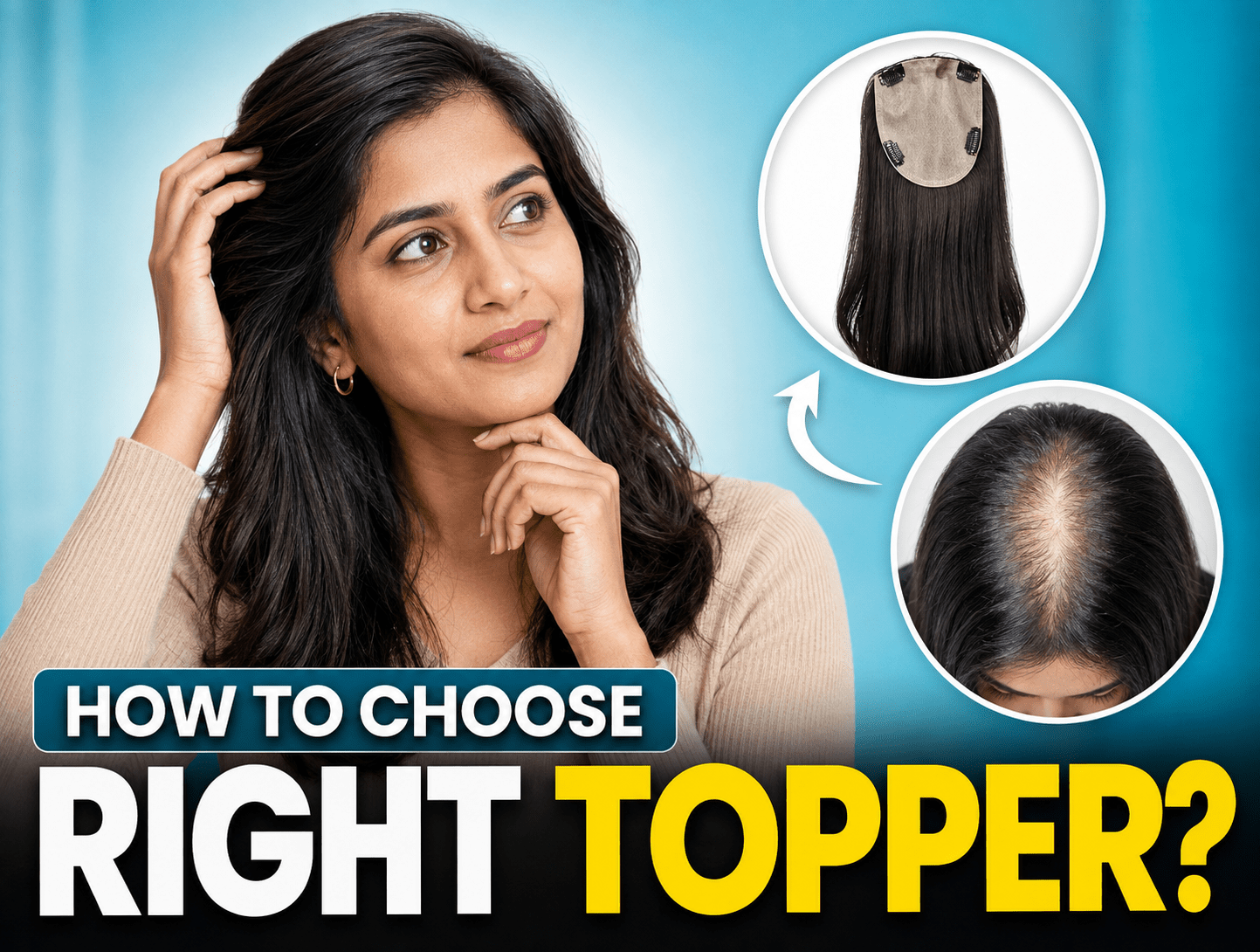
How to Choose the Right Hair Topper for Crown Thinning
Crown thinning can appear in different ways. For some women, it is limited to the crown, while for others it spreads across the parting and top of the scalp. That is why choosing the right topper i...
Read moreneed help?


Leave a comment
This site is protected by hCaptcha and the hCaptcha Privacy Policy and Terms of Service apply.