

Article: Will a Hair Topper Stay in Place on a Windy Day?
Will a Hair Topper Stay in Place on a Windy Day?
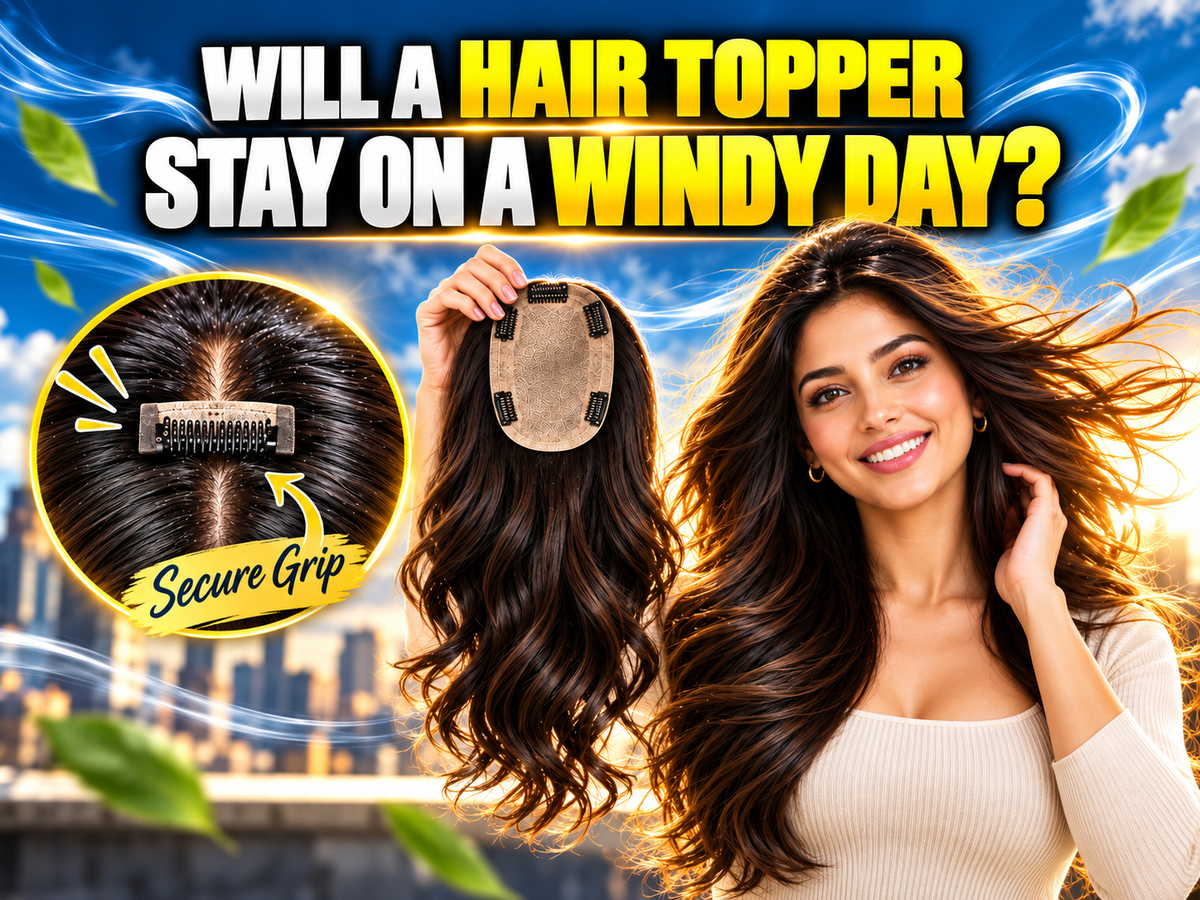
One of the most common worries about wearing a hair topper outdoors is simple: what happens when the wind picks up? If you are using a topper to cover thinning at the crown or create fuller-looking hair, the last thing you want is to spend the day wondering whether it is moving, lifting, or becoming noticeable.
A properly fitted hair topper is designed to remain stable during normal daily activities, including time outdoors. However, security depends on several factors, including the attachment method, the amount and strength of your natural hair, the size and placement of the topper, and how well the topper has been blended. Understanding these factors can make windy days feel far less intimidating.
| Table of Content |
How Hair Toppers Stay Secure on Your Head
Many hair toppers use small pressure-sensitive clips placed around the underside of the base to help keep them secure. These clips attach to sections of your natural hair around the thinning area rather than simply allowing the topper to rest on the head. When the topper is positioned correctly, the attachment points work together to provide stability and help distribute the weight more evenly. Your surrounding natural hair also plays an important role by helping the topper blend into your hairstyle. This combination of secure attachment and proper blending can make the topper feel more integrated with your natural hair during everyday wear.
A few factors influence how securely a hair topper sits:
Clip placement:
The clips should attach to areas where there is enough natural hair to provide support without creating unnecessary pulling.
Number of attachment points:
Multiple clips can help distribute the hold more evenly instead of placing all the pressure on one section of hair.
Condition of your natural hair:
Someone with sufficient healthy hair around the crown may be able to use a clip-in hair topper comfortably, while very sparse or fragile areas may require more careful consideration.
Base size:
Hair toppers for crown thinning should cover the intended area while allowing the clips to sit on stronger surrounding hair.
Correct positioning:
A topper that is centered and placed correctly is generally easier to secure and blend than one that sits too far forward, backward, or to one side.
Choosing an appropriate base size is especially important for both coverage and stability. If the base is too small for the thinning area, the clips may end up attaching close to weaker hair instead of stronger surrounding sections. A well-positioned topper should feel secure and balanced without requiring excessive tension on your natural hair.
What Actually Happens to a Hair Topper in the Wind?
Wind usually moves the hair before it affects the topper itself. Just like your natural hair, topper hair may lift, shift direction, or move across the face in a breeze. This is normal and can help a well-blended topper look more natural. The main concern is whether the movement exposes the base, clips, or the transition between your natural hair and the topper.
You may notice:
- The topper hair and your natural hair may move together in the wind.
- Waves, layers, or the parting may become less neat.
- Poorly blended areas can become easier to notice when the hair separates.
- Very strong wind may briefly lift the hair enough to show parts of the base.
A properly fitted and securely attached topper should generally remain in place during normal outdoor conditions. Stronger wind may affect the hairstyle more noticeably, but good fit, clip placement, and blending can help the topper feel more secure.
Why Proper Fit and Clip Placement Matter
A secure topper begins with fit. If the topper is too loose, positioned incorrectly, or attached to unsuitable sections of hair, even a well-made piece may feel less stable than it should. When attaching a clip-in topper, each clip should have enough natural hair to grip without creating excessive pulling. The base should sit comfortably against the top of the head rather than feeling as though one clip is carrying most of the tension.
Balanced attachment matters because wind can create movement from different directions. When the topper is supported at several appropriate points, movement is distributed more evenly instead of concentrating pressure in one area. Placement also affects appearance. Positioning a topper too far forward, too far backward, or slightly off-center can make blending more difficult. Once the surrounding hair begins moving outdoors, an imperfect transition may become easier to notice.
Hair toppers for women are also available in different base dimensions because thinning patterns vary considerably. Someone with a narrow widening part may need a different coverage area than someone experiencing broader crown thinning. Choosing a base that corresponds to your actual coverage needs can improve both appearance and stability. The topper should feel secure without feeling painfully tight. More tension does not automatically mean more security. If clips are pulling, pinching, or creating persistent discomfort, the solution may be to reconsider the positioning or topper design rather than simply fastening everything more tightly.
How to Make Your Hair Topper Feel More Secure Outdoors
A few simple habits can make wearing a hair topper outdoors feel more secure and comfortable. Start by attaching the topper before finishing your hairstyle so you can check whether the base is sitting evenly. Once it is in place, gently move your head from side to side and notice whether the topper stays stable. It is also helpful to check the blend from the front, sides, and back rather than relying on one mirror angle. Good preparation can make you feel more confident before stepping into windy conditions.
Before going outdoors, check a few important details:
- Make sure each clip is fully secured before you leave.
- The topper should sit evenly and comfortably without noticeable shifting.
- Style your natural hair and topper hair together so they move more naturally as one hairstyle.
- Pay attention to the sides, back, and parting, where movement may be more noticeable.
- A quick touch-up can help restore your hairstyle after stronger wind.
- If you remove the topper during the day, make sure it is positioned securely again.
The aim is not to stop the hair from moving completely. Natural-looking hair toppers should move with your own hair while the base stays comfortably in position. A secure attachment and good blending can make outdoor wear feel much easier.
Common Mistakes That Can Make a Topper Shift
Sometimes a topper feels insecure not because of the wind itself, but because of how it has been selected or attached. One common issue is placing clips too close to very sparse areas. Clips need suitable hair to hold onto. If they are repeatedly attached where the natural hair is extremely fine, the connection may feel less stable and may also create unnecessary tension.
Another mistake is choosing a base that does not correspond well with the thinning area. A topper intended for a smaller area may not provide the same stability when used to cover broader thinning because the edges may fall within weaker sections of hair. Rushing the attachment process can also create problems. If one side is secured before the topper has been positioned properly, the base can sit unevenly. It may look acceptable while you are standing still but become more noticeable once the hair begins moving.
Poor blending is another frequent source of anxiety. Sometimes the topper itself has not shifted at all, but wind separates the topper hair from the wearer’s natural hair, making the transition more visible. Matching the color, texture, density, and styling direction helps the topper work visually with your existing hair. Excessive tension should not be used as a solution for insecurity. Fastening clips aggressively in an attempt to prevent movement can make the topper uncomfortable and place unnecessary stress on the natural hair underneath.
What to Consider If Your Natural Hair Is Thin or Fragile
If your natural hair is thin or fragile, topper attachment needs a little more care. A clip-in hair topper relies on your own hair for support, so clips should sit in areas that can hold them comfortably. Attaching repeatedly to very sparse sections may make the topper feel less secure and can also create unnecessary pulling. The goal is to find stable attachment points without making the hair or scalp feel strained.
- Choose stronger attachment areas Avoid placing clips directly into the weakest or sparsest sections whenever possible.
- Watch for repeated tension Using exactly the same attachment points every day may concentrate pressure on a small area.
- Pay attention to comfort Pulling, tenderness, or ongoing discomfort can be a sign that the placement needs adjusting.
- Reassess the fit over time If your thinning pattern changes, the original base size or clip arrangement may no longer feel as suitable.
- Do not rely on tighter clipping More tension does not necessarily create better security, especially with fragile hair.
For windy conditions, the aim should be balanced support rather than a tighter grip. A topper should feel secure while still being comfortable on your natural hair. If the attachment starts to feel different over time, it may be worth reassessing the fit and placement.
FAQs About Wearing Hair Toppers in Windy Weather
Q. Can a hair topper blow off in the wind?
A. A properly fitted and correctly attached topper is intended to remain secure during normal daily wear. However, no attachment method should be treated as completely unaffected by every possible weather condition, especially unusually strong wind. Checking the fit and clips before going outdoors can provide greater confidence.
Q. Will the base show when the wind moves my hair?
A. It can become more visible if the topper is poorly positioned or not well blended. With suitable base coverage, proper placement, and natural blending, normal hair movement does not automatically expose the topper.
Q. How do I know if my topper is secure enough?
A. After attaching it, gently move your head and check whether the base remains in its intended position. You should feel stability without significant sliding, painful pulling, or excessive tension on individual clips.
Q. Should I clip my topper tighter on windy days?
A. Not necessarily. Tightening clips excessively can create discomfort without solving an underlying fit problem. Proper positioning, balanced attachment, and suitable anchor hair are more important than simply creating more tension.
Q. Are lightweight hair toppers easier to wear outdoors?
A. Weight can influence comfort and how much pressure is placed on attachment points, but security depends on more than weight alone. Base size, attachment method, natural-hair density, positioning, and blending all contribute to how stable the topper feels.
Q. Can I wear a topper if I have very thin hair?
A. That depends on where the thinning occurs and whether there is enough suitable natural hair available for the topper's attachment method. If your existing hair is particularly fragile or sparse around potential clip positions, it is important to consider a design and attachment approach appropriate for your individual situation.
Q. What should I do after being outside in strong wind?
A. Check the topper position in a mirror and gently smooth or brush the hair if needed. Often, the main change after windy weather is simply that the hairstyle needs refreshing rather than the topper itself needing to be completely repositioned.
Conclusion
Wind does not automatically mean that you have to avoid wearing a hair topper outdoors. When the topper fits the coverage area correctly, attaches to appropriate sections of natural hair, and blends well with the surrounding hairstyle, it can feel considerably more secure during everyday outdoor activities.
The most important goal is not to make the topper completely rigid. It is to create a comfortable, balanced fit that allows the hair to move naturally while the base remains stable. Taking a few moments to check your clips, placement, and blend before going outside can make windy days feel much more manageable.
Wondering what’s best for your hair concerns?📞+91 9967123333 Reach out to us now, and we’ll guide you with expert advice tailored to you. Your journey to healthier hair starts here!
Worried a topper will look fake or feel heavy? We get it. That’s why we customize our advice based on your needs.👉 [Click here to get topper suggestions just for you.]
Read more
Why Is Your Wig Shedding? What’s Normal and What’s Not
Finding a few strands of hair in your brush after wearing or styling a wig can be unsettling. If you have invested time in choosing a wig that looks natural and feels like part of your everyday app...
Read moreneed help?


Leave a comment
This site is protected by hCaptcha and the hCaptcha Privacy Policy and Terms of Service apply.