

Why Hair Extensions Don’t Blend With Natural Hair
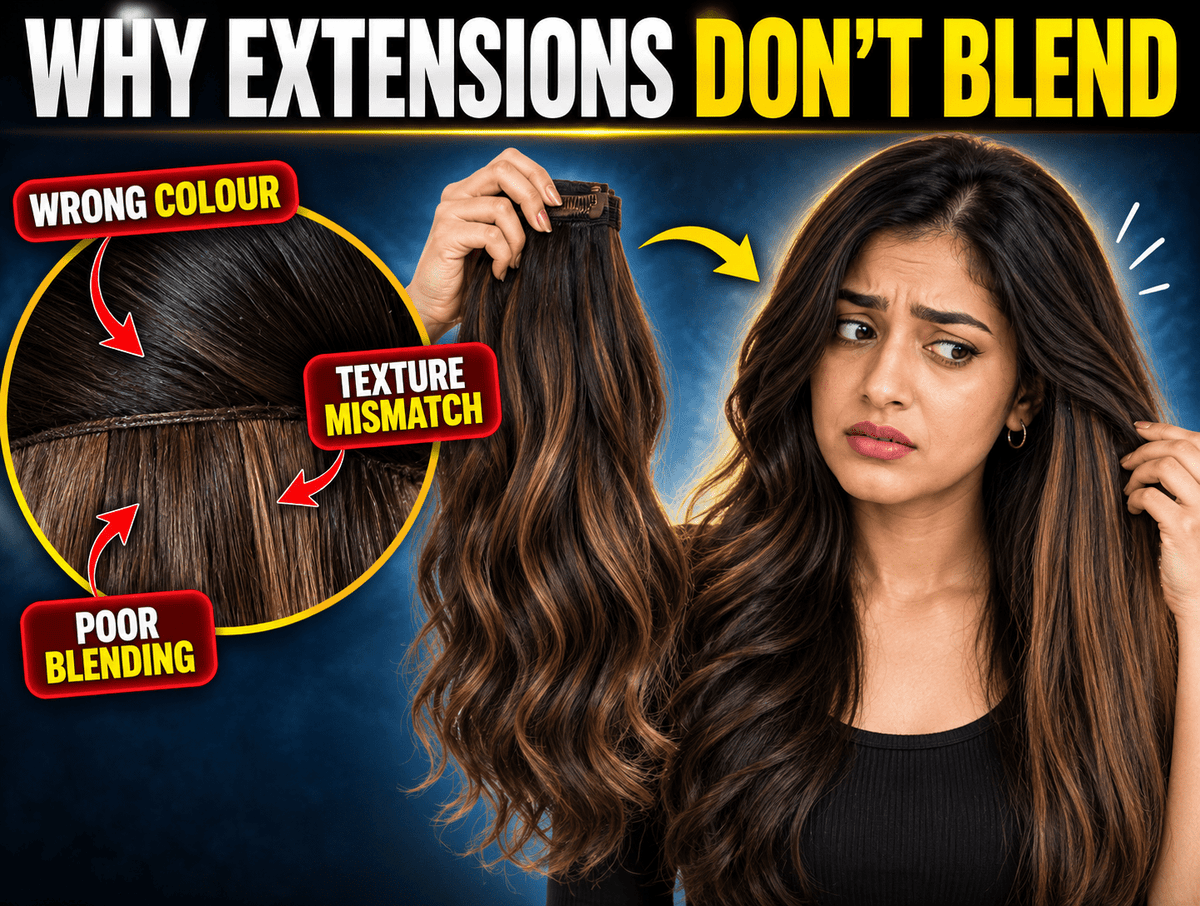
Hair extensions can add length, fullness, and shape, but they do not automatically create a natural looking result. When extensions fail to blend, your natural hair may appear to sit separately over the added length, the ends may form a visible line, or the color and texture may look disconnected.
A seamless result depends on several factors working together, including color, texture, density, haircut, placement, and styling. Understanding these areas can help explain why extensions sometimes look noticeable and what can improve the overall finish.
| Table of Content |
| What Natural Blending Means |
|
Matching Color & Texture |
|
Hair Length & Density |
| Why Placement Matters |
|
Blending by Extension Type |
| Cutting & Styling Tips |
|
Picking the Right Extensions |
What Does It Mean for Hair Extensions to Blend Naturally?
Blending is the transition between your natural hair and the extension hair. When it works well, both appear to form one hairstyle rather than two separate layers.
A good blend usually depends on:
- Compatible color through the mid-lengths and ends
- Similar texture and movement
- Balanced extension density
- Correct placement
- A haircut that connects the different lengths
- Styling that brings both types of hair together
Hidden attachment points alone do not guarantee a natural result. Tape tabs, rings, bonds, or clips may be concealed while the natural ends still remain clearly visible over the extensions.
This is why the full hairstyle matters more than the attachment method alone.
Why Color and Texture Mismatches Stand Out
Color mismatch is one of the most common reasons extensions look separate from natural hair. Matching only the root color can be misleading because extensions usually need to blend most closely with the mid-lengths and ends.
If your roots are dark but your lower lengths are lighter or highlighted, extensions matched only to the root area may appear too dark.
When considering color, look at:
- Overall tone
- Highlights or darker strands
- Warm or cool undertones
- Mid-length and end color
- How the shade looks in different lighting
Texture is just as important. Straight extension hair may stand out against naturally wavy hair, while a different curl or movement pattern can make the transition easy to notice.
Human hair extensions can generally be styled to create a more consistent finish, but styling works best when the starting texture is already reasonably compatible with your natural hair.
How Hair Length, Density, and Haircut Affect Blending
The shape of your natural haircut can strongly affect the final result. Short or blunt hair can be more difficult to blend with significantly longer extensions because the natural ends may form a clear line over the added hair.
A softer, more layered haircut often creates a smoother transition between different lengths.
Density also matters. Thick natural hair needs enough extension hair underneath to continue that fullness through the lower lengths. If there is too little extension density, the ends may look thin compared with the natural hair above.
Fine hair creates a different challenge. Too much extension hair may look heavy and disproportionate.
Important factors include:
- Your starting hair length
- Whether your haircut is blunt or layered
- The difference between natural and desired length
- Your natural density
- The amount of extension hair used
More hair is not always better. The goal is to create a believable continuation of your natural hair.
Why Placement Matters
Even well-matched extensions can look uneven if they are placed incorrectly.
The crown and parting areas need enough natural hair to cover attachment points. Extensions placed too close to visible areas may become noticeable when the hair moves. The sides also matter. Sometimes a hairstyle looks blended from the back but still appears disconnected around the face because most of the extension hair has been placed toward the rear.
Placement should consider:
- Where length is needed
- Where volume is needed
- Natural density in each area
- Your usual parting
- Everyday hairstyles
- Whether you often wear your hair up
For permanent hair extensions, placement should be adapted to the individual rather than following exactly the same pattern for every person.
Blending Issues With Different Extension Types
Different methods create different attachment patterns, but the same basic blending rules still apply.
Tape-In Hair Extensions
Tape-in hair extensions use flat attachment sections that can distribute hair across wider areas. Blending issues may appear when there is not enough coverage, the extension density is uneven, or the natural ends remain too blunt. The placement needs to work with the overall haircut, not just keep the tapes hidden.
Micro Ring Hair Extensions
Micro ring hair extensions are attached in individual sections, which allows flexibility in how the added hair is distributed. However, if too many strands are concentrated in one area and too few are used elsewhere, the hairstyle may look uneven. The sides and back need to feel balanced rather than disconnected.
Keratin Bond Hair Extensions
Keratin bond hair extensions also use individual attachment points. This allows careful distribution, but placement alone cannot solve problems caused by a blunt haircut, color mismatch, or incorrect density. The finished haircut and styling remain important for creating a smooth transition.
Clip-In Hair Extensions
Clip-in hair extensions offer more flexibility because they can be positioned differently each time they are worn. If the pieces are placed too low, the upper natural hair may sit visibly above them. If they are placed too high, the clips may become harder to conceal.
It helps to check the hairstyle from different angles, especially:
- The back
- Both sides
- Around the face
- The crown
- The line where natural hair ends
A blend that looks good from the front may still need adjustment at the back or sides.
How Cutting, Styling, and Maintenance Help
Extensions often need to become part of the overall haircut rather than simply being added underneath the natural hair. Strategic layering can soften blunt natural ends and connect shorter sections with longer extension hair. Face-framing areas may also need shaping so the sides do not look shorter and disconnected.
Professional shaping can help with:
- Blunt ends
- Sudden changes in length
- Heavy natural sections
- Uneven side areas
- Differences in overall density
Styling can improve the blend further. When natural hair and extensions are styled together, they are more likely to share the same movement and finish.
Waves and soft movement can help different lengths flow together, but styling should not be used only to hide a poor blend. Straight hairstyles can reveal differences more easily, so the haircut and density should still look balanced without relying on curls.
Maintenance is also important for permanent hair extensions. As your natural hair grows, the attachment points move farther from the scalp and the original placement gradually changes. For clip-in extensions, consistent placement and proper styling help maintain the appearance of the blend over time.
How to Choose Extensions That Suit Your Natural Hair
Choosing extensions should begin with your existing hair rather than only with your desired length. Consider your current haircut, texture, density, color, and usual styling habits before deciding how much length or volume to add.
Think about:
- Current hair length
- Hair density
- Natural texture
- Color through the lengths and ends
- Existing layers
- Desired length and volume
- Normal styling routine
- Preferred extension method
If you have short or blunt hair, a dramatic increase in length may require more careful shaping and density planning. Thick hair may need more extension density through the lower lengths, while fine hair may require a lighter, more balanced approach.
It is also important to choose the extension method according to your routine. Tape-in, micro ring, and keratin bond extensions remain attached between maintenance appointments, while clip-in hair extensions can be worn as needed.
No single method guarantees a seamless result. A natural blend comes from matching the method, placement, color, texture, density, and haircut to your individual hair.
Conclusion
Hair extensions may fail to blend because of color or texture differences, blunt natural ends, incorrect density, excessive changes in length, uneven placement, or insufficient shaping after application.
Whether you choose tape-in hair extensions, micro ring hair extensions, keratin bond hair extensions, or clip-in hair extensions, the goal is the same: the added hair should work with your natural hair rather than sit separately from it. When color, texture, density, placement, cutting, and styling are balanced, the finished hairstyle can appear much more cohesive and natural.
Ready to explore the right hair loss solution? 📞+91 9967123333 Call us, and let’s find the perfect match for your hair goals. Personalized support awaits!
Want natural volume but scared of damage or visible extensions?
Our experts will help you choose the right tape-in extensions for your hair type and lifestyle.
👉 [Fill out the form now] and get a custom recommendation for seamless, long-lasting extensions.
Read more
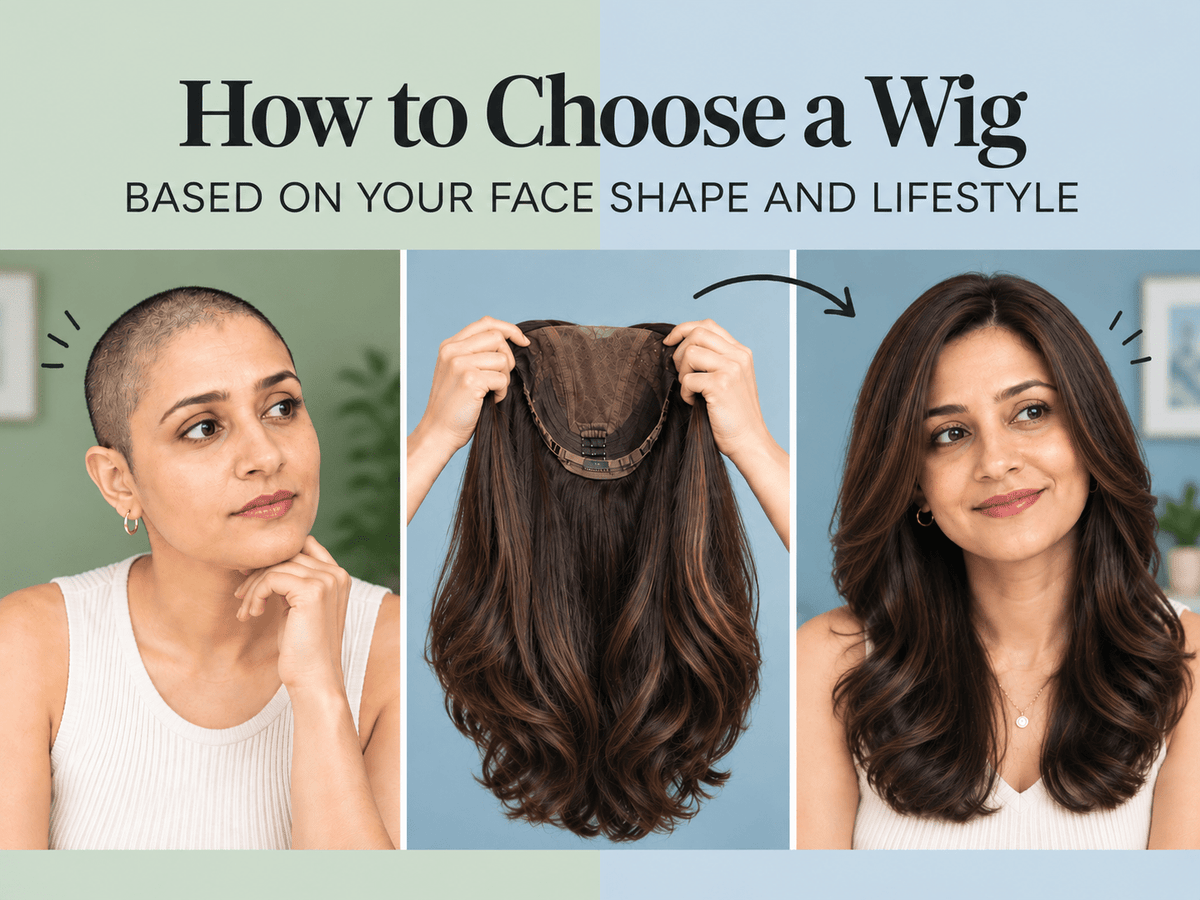
How to Choose a Wig Based on Your Face Shape and Lifestyle
Choosing a wig is not only about selecting a hairstyle you like. A wig should complement your facial features, match your personal style, and fit naturally into your everyday routine. Whether you a...
Read more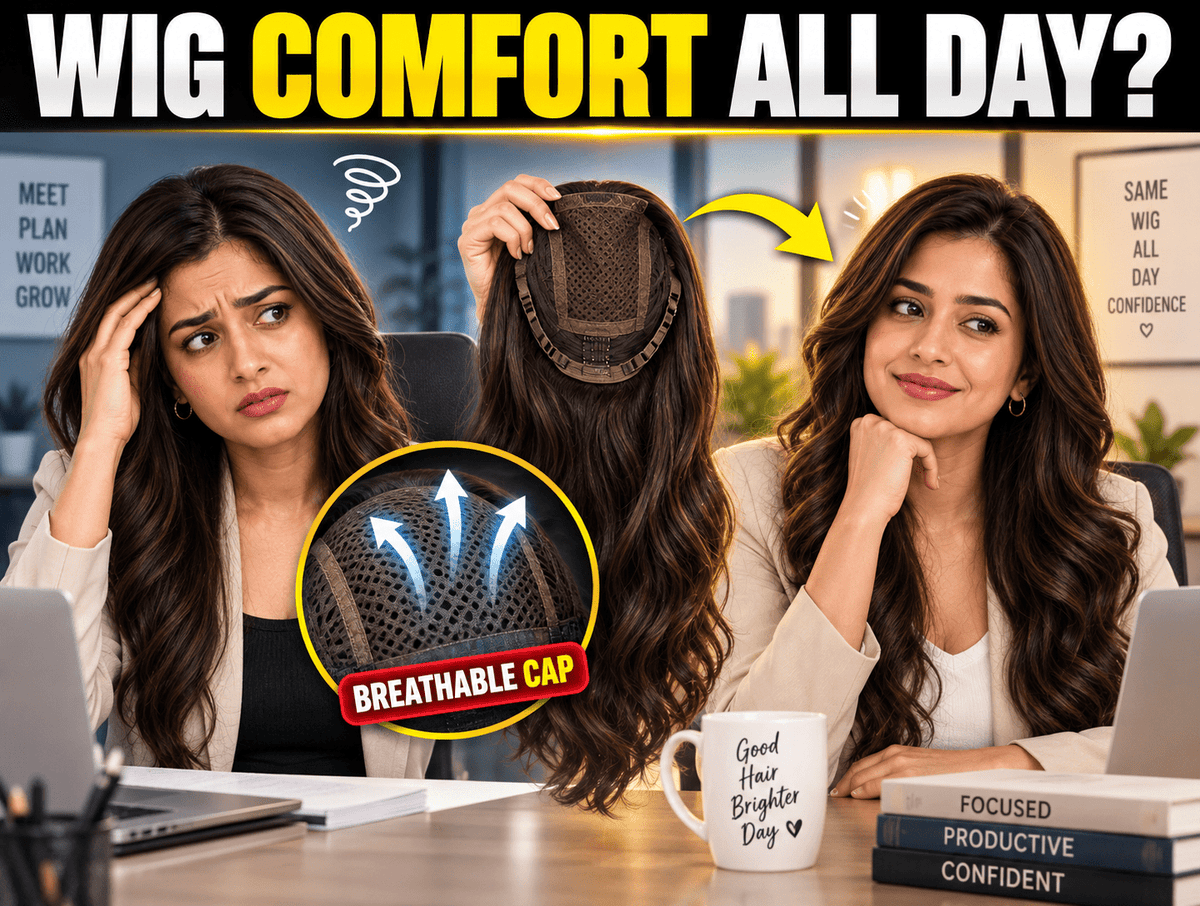
Can Wigs Stay Comfortable During Long Office Hours?
Wearing a wig through a full office day is different from wearing one for a short event. Commuting, long meetings, air-conditioned rooms, warm outdoor conditions, and several hours of continuous we...
Read moreneed help?


Leave a comment
This site is protected by hCaptcha and the hCaptcha Privacy Policy and Terms of Service apply.