
Hair Extensions for Damaged Hair: Which Method Is the Safest?
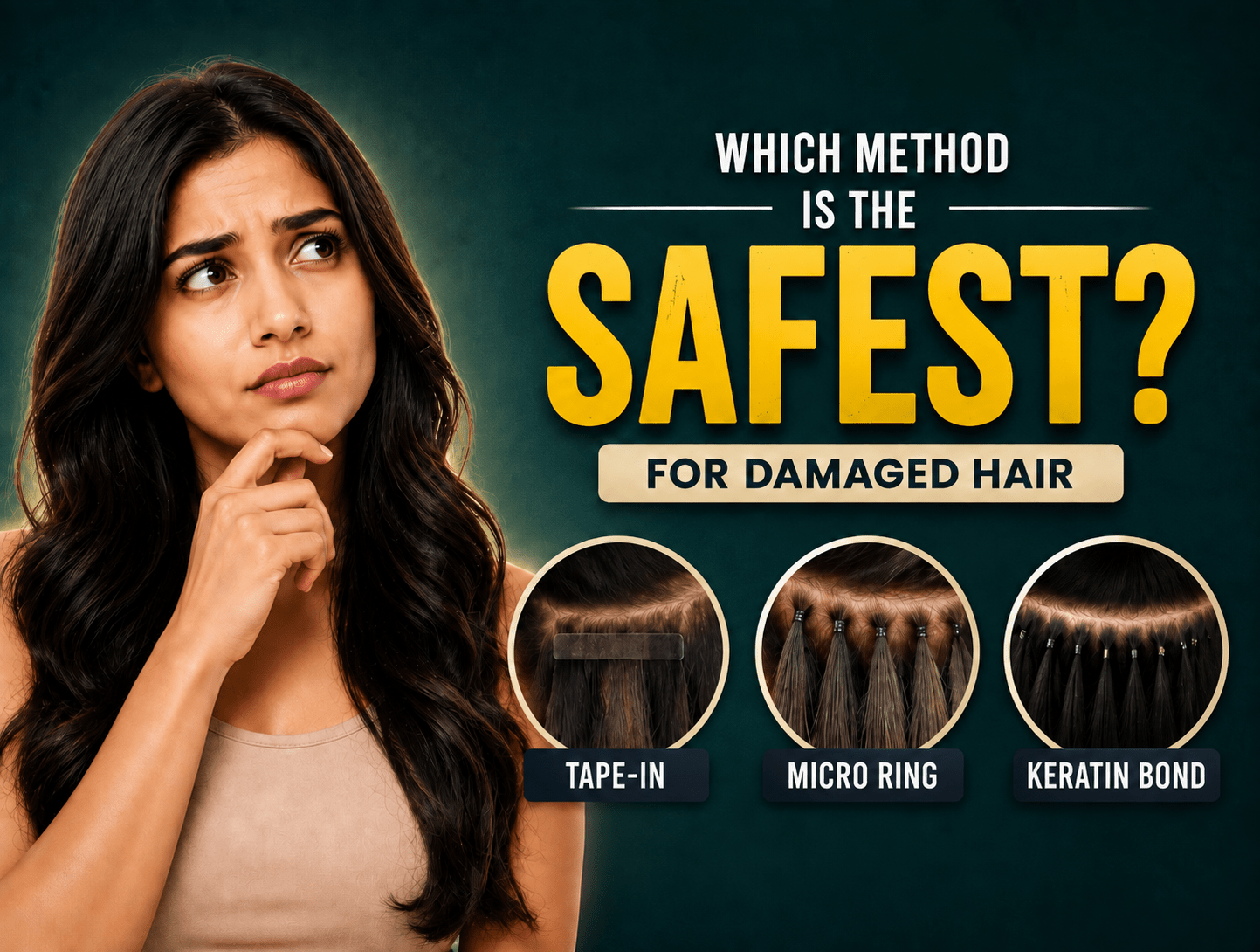
Damaged hair can make permanent hair extensions feel like a risky decision. You may want fuller, healthier-looking hair, but you may also worry about breakage, thinning, or putting extra stress on already fragile strands.
The important thing to understand is that there is no single extension method that is safest for everyone. The right choice depends on your hair density, strand strength, level of damage, scalp condition, lifestyle, and how the extensions are customised and maintained.
|
Table of Contents |
Can Damaged Hair Handle Permanent Hair Extensions?
Having damaged hair does not automatically mean you cannot wear extensions. Some women may have dryness, colour damage, fine strands, or thinner ends while still having enough healthy natural hair to support a carefully planned extension application.
The situation becomes different when there is severe breakage, excessive shedding, significant thinning, or very weak roots. In these cases, adding extra weight may not be suitable until the condition of the natural hair has been properly assessed.
Before choosing extensions, a professional should consider:
- Natural hair density
- Strand thickness and strength
- Existing breakage
- Scalp condition
- Previous bleaching or chemical treatments
- Desired length and volume
- Daily styling habits
Fine hair and damaged hair are not always the same. Fine hair can still be healthy, while thicker hair may be severely weakened after repeated chemical treatments.
The goal should therefore be to add only as much hair as the natural strands can comfortably support. A subtle increase in volume can often look more natural than an unnecessarily heavy transformation.
What Actually Causes Damage With Hair Extensions?
Many women assume that a particular extension method is naturally damaging. In reality, problems are often caused by poor application, excess weight, incorrect maintenance, or improper removal.
Even premium extensions can place stress on the natural hair if too much extension hair is attached to sections that are too small or weak. This is especially important for women who already have fragile or chemically treated hair.
Common causes of extension-related stress include:
- Extensions that are too heavy
- Too many extensions being installed
- Incorrect sectioning
- Attachments placed on fragile areas
- Aggressive brushing
- Tight hairstyles
- Delayed maintenance
- Sleeping with wet hair
- Poor removal techniques
- Removing extensions at home
Areas such as the temples may naturally contain finer strands and require more careful placement. Applying the same amount of extension weight throughout the entire head may not be suitable.
This is why the quality of the application matters just as much as the method itself.
Which Hair Extension Method Is Safest for Damaged Hair?
Women with fragile hair often compare tape-in hair extensions, micro ring hair extensions, and keratin bond extensions. Each technique has advantages, but none should be considered universally safest.
The most suitable option depends on the condition of the natural hair and how much weight it can comfortably support.
Extension Method |
How It Works |
Possible Advantage |
Main Consideration |
Tape-In Hair Extensions |
Flat adhesive tapes are attached to sections of natural hair. | Weight is spread across a wider section and the attachment sits flat | Heavy tapes or improper removal may stress weak strands. |
Micro Ring Hair Extensions |
Small rings secure extension strands without adhesive. | Adhesive-free and allows individual placement. | Small sections of natural hair must be strong enough to support the extension weight. |
Keratin Bond Extensions |
Individual extensions are attached using small keratin-based bonds. | Precise placement and customised density. |
Bonds should not be too heavy for fine or fragile strands. |
The Key Takeaway
There is no single winner between tape-ins, micro rings, and keratin bonds. The safest method is the one selected according to the strength, density, and condition of your own hair.
Why Extension Weight and Customisation Matter
The extension technique is only one part of a successful application. Extension weight, density, length, and placement can have an equally important impact on comfort and natural hair health.
For example, two women may both wear tape-in hair extensions, but one may receive a lightweight application while the other gets a much heavier installation. Their experience can therefore be completely different even though the extension method is the same.
Important factors to customise include:
- Density: The amount of added hair should match the natural density.
- Length: Longer extensions generally create additional weight.
- Attachment size: Fine hair may require smaller or lighter sections.
- Placement: Fragile areas may need less weight or no attachments.
- Texture: A close texture match can reduce the need for excessive styling.
- Colour: Accurate matching can reduce the need for further chemical processing.
Women with fine or damaged hair often benefit from a more conservative approach. Instead of trying to create extremely dramatic density, the focus can be on adding enough volume to make the hair appear naturally fuller.
This also helps make the extensions less noticeable. The ideal result should blend with your own hair rather than look like a separate layer of added hair.
Why 100% Human Hair Makes a Difference
The quality of the extension hair has a major influence on the final result. 100% human hair extensions are commonly used for premium applications because they generally provide more natural movement, styling flexibility, and realistic blending.
For women who want their extensions to remain discreet, quality matters as much as length or volume. Extensions should ideally match the natural hair in colour, texture, thickness, and movement.
High-quality human hair extensions can provide:
- More natural movement
- Better blending
- Easier styling
- Custom cutting and shaping
- A more realistic overall appearance
Texture matching is particularly useful for damaged hair. When the extensions already resemble your natural texture, you may not need to use as much heat styling every day simply to make everything look consistent.
This can make daily styling more convenient while helping the overall hairstyle appear more natural.
How to Protect Damaged Hair While Wearing Extensions
Good permanent extension maintenance is essential, especially when your natural hair is already fragile. Even a well-applied extension method needs proper care to minimise tangling and unnecessary pulling.
Your maintenance routine does not need to be complicated. Consistency and gentle handling are usually more important than using many different products.
Basic extension care includes:
- Brush gently from the ends upward.
- Support the hair near attachment points while brushing.
- Avoid tight hairstyles that repeatedly pull at the roots.
- Dry the attachment area properly after washing.
- Avoid sleeping with wet hair.
- Limit excessive heat styling.
- Use hair products according to your extension method.
- Attend maintenance appointments at the recommended time.
- Have your extensions professionally repositioned and removed.
As natural hair grows, permanent extensions gradually move farther away from the scalp. Timely maintenance keeps the attachments manageable and helps prevent excessive tangling around the roots.
Professional removal is particularly important. Pulling or peeling extensions out at home can damage natural hair even if the original installation was done correctly.
When Should You Avoid Permanent Hair Extensions?
Sometimes it is better to delay permanent extensions rather than force a transformation. If the natural hair is extremely weak or the scalp is unhealthy, adding extra weight may not be appropriate.
This does not necessarily mean extensions are permanently unsuitable. It may simply mean that your hair needs recovery or further assessment first.
Take extra caution if you experience:
- Severe active breakage
- Excessive or sudden shedding
- Significant hair thinning
- Very weak roots
- Severe bleach damage
- Bald or noticeably sparse areas
- Persistent scalp irritation
- Scalp pain or sensitivity
If your hair loss is sudden, severe, or unexplained, consider having the underlying cause assessed by an appropriate dermatologist or medical professional before choosing a cosmetic solution.
Extensions are designed to enhance existing hair. They should not be used as a substitute for understanding an active hair or scalp condition.
Conclusion
There is no single safest hair extension method for damaged hair. Tape-ins, micro rings, and keratin bonds can all work when chosen according to your hair’s strength, density, and condition.
For fragile hair, a lightweight and customised approach is usually more suitable than adding excessive length or volume. Professional application, quality human hair, proper maintenance, and careful removal are key to achieving a natural and comfortable result.
At Alchemane, the focus is on selecting a method that suits your individual hair rather than using one standard solution for everyone.
Take the first step toward confident hair today! 📞 +91 9967123333 Call us for a personalized consultation and discover the most effective solution for your hair needs.
Dreaming of thicker, longer hair without damage?
Our experts will guide you to the perfect set of tape-in or clip-in extensions — safe, seamless, and stunning.
👉 [Fill the form now for personalised help.]
Read more
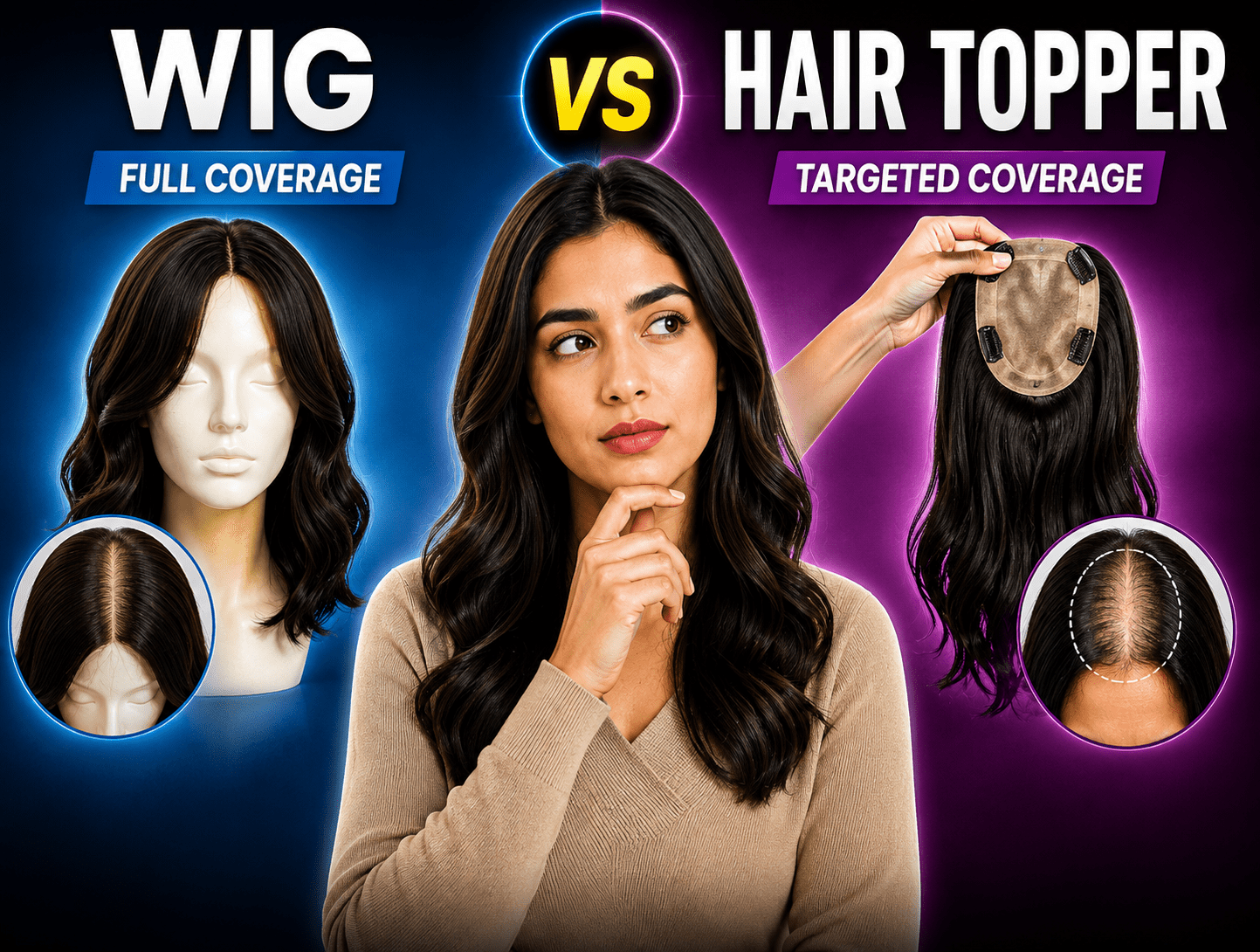
Wig vs. Hair Topper for Temple and Overall Hair Thinning
Hair thinning does not always follow the same pattern. For some women, the first noticeable change appears around the temples or front hairline. For others, density gradually decreases across the p...
Read more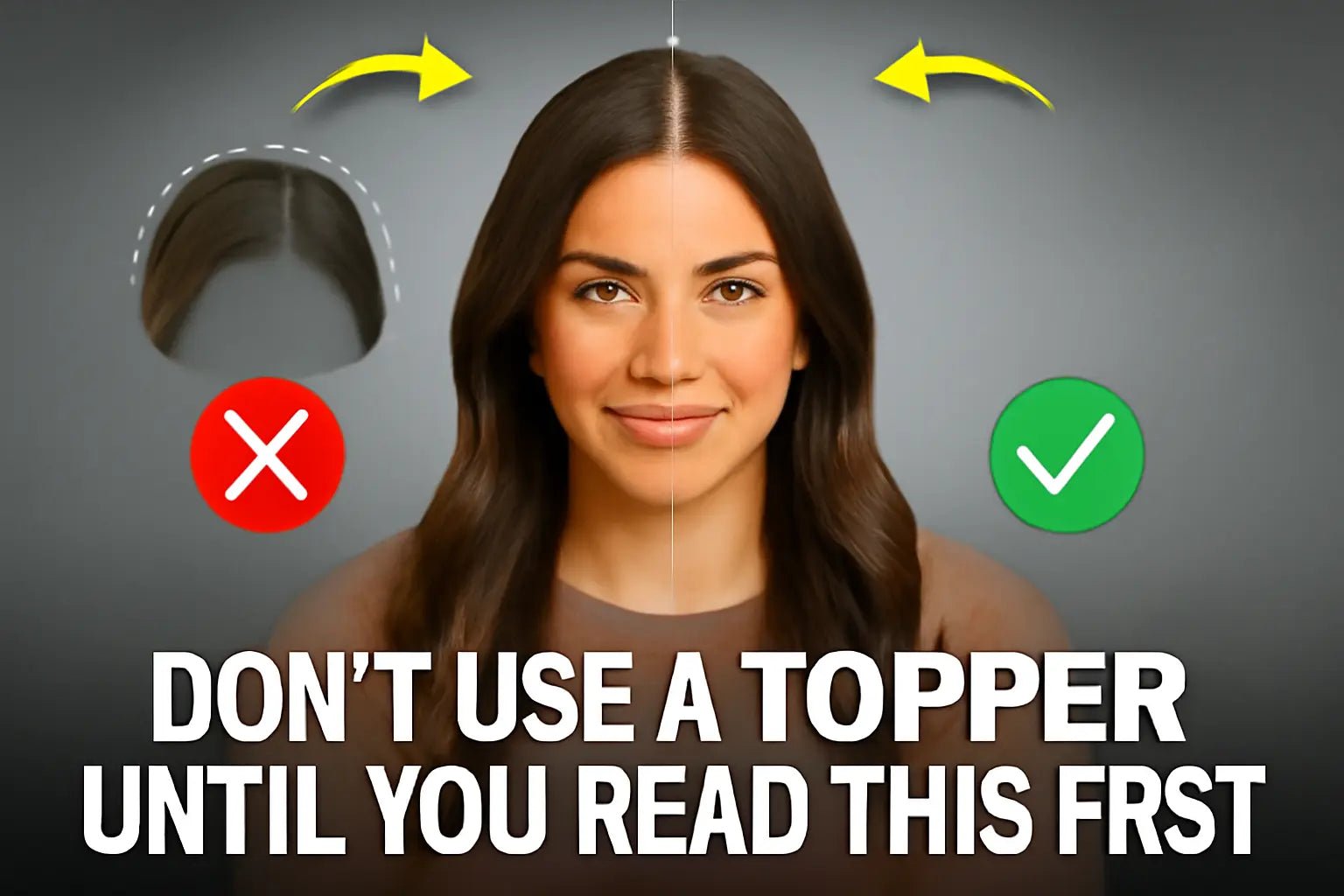
Why Does the Wrong Hair Topper Density Ruin a Natural Look?
A hair topper is designed to add coverage and volume to areas where hair appears thinner, especially around the crown and top of the head. However, achieving a natural appearance depends on more th...
Read moreneed help?


Leave a comment
This site is protected by hCaptcha and the hCaptcha Privacy Policy and Terms of Service apply.