

Can You Tie Up Permanent Hair Extensions Without Showing Bonds?
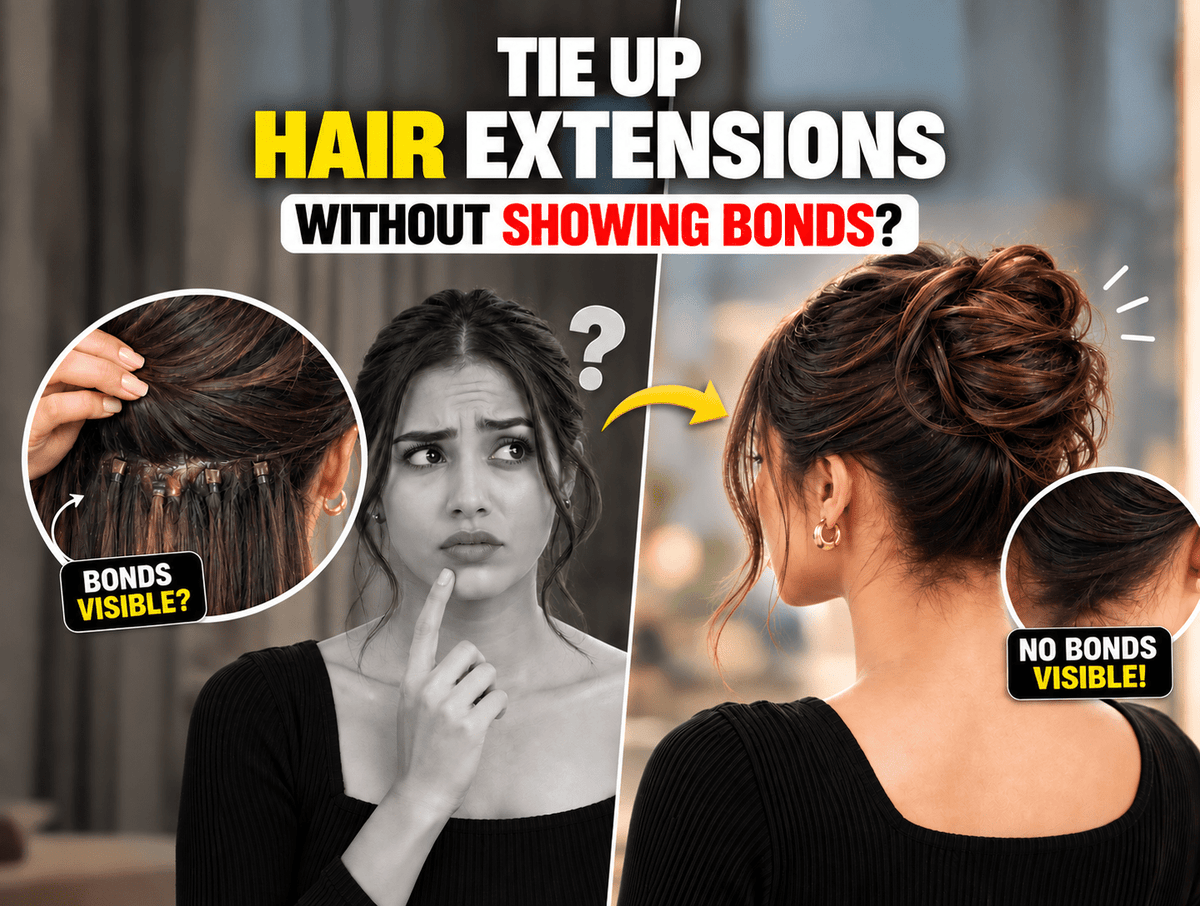
Permanent hair extensions can add length and volume while still allowing you to enjoy many everyday hairstyles. One of the biggest styling concerns, however, comes when you want to wear a ponytail, bun, or half-up style. You may wonder whether lifting your hair will expose the bonds or attachment points. In many cases, you can tie your hair up while keeping the extensions discreet when the placement and styling are handled carefully.
The way your extensions behave in an updo depends on the extension method, your natural hair density, and where the attachments have been positioned. Tape-in hair extensions, keratin bond extensions, and micro ring hair extensions all move differently when the hair is lifted. The key is to work with the natural direction of the extensions rather than pulling them into a hairstyle that creates excessive tension.
| Table of Content |
Can You Tie Your Hair Up With Permanent Extensions?
Yes, you can usually tie your hair up while wearing permanent hair extensions. Ponytails, loose buns, braids, and half-up hairstyles may all be possible depending on how your extensions are installed. The important factor is how much the hairstyle changes the direction of the attachment points. A relaxed style generally allows the extensions to move more naturally than an extremely tight updo.
A low ponytail is often easier to manage because the hair continues to fall in a similar direction to the way it naturally sits. A very high ponytail requires sections from the nape, sides, and back of the head to move upward. This can make attachment points more noticeable if they are positioned too close to the perimeter.
Styles that may work well include:
- Low or mid-level ponytails
- Loose buns
- Relaxed braids
- Half-up hairstyles
- Softly gathered updos
The goal is not to make every hairstyle extremely tight. A little softness at the roots can help your natural hair continue covering the attachments while also reducing unnecessary pulling.
Why Extension Bonds Can Become Visible
When your hair is worn down, the upper layers of your natural hair usually fall over the extension attachments. These layers help conceal tape tabs, keratin bonds, or micro rings and create a more natural-looking finish. When you lift the hair into a ponytail or bun, those covering sections can shift away from their normal position.
Bond visibility can also increase when the hairstyle is pulled very tightly. Tight styling may separate the natural hair around the attachments, especially near the temples, nape, sides, and crown. Once the natural covering hair separates, individual attachments may become easier to notice.
Some common reasons attachments may show include:
- The hairstyle is pulled too tightly.
- There is limited natural hair covering the attachment area.
- Extensions are positioned too close to the hairline.
- The ponytail is higher than the placement comfortably allows.
- Natural hair has grown since the extensions were applied.
- Hair around the bonds has separated during styling.
Hair density also matters. Someone with naturally fuller hair may have more coverage around the attachments than someone with fine or thinning hair. This is why extension placement needs to be customized rather than following exactly the same pattern for every person.
How Placement Affects Bond Visibility
Placement is one of the most important factors in determining how easily you can wear your permanent hair extensions in an updo. Extensions should be positioned so that enough natural hair remains around the perimeter of the head. This natural hair helps conceal the attachment points when the hair is worn both down and up.
Areas such as the temples, sides, crown, and nape require particular attention. If attachments are positioned too close to these visible areas, they may become exposed when you gather your hair. Leaving adequate natural hair around the edges creates a coverage zone that helps keep the extensions discreet.
Good placement should consider:
- Your normal hair parting
- Natural hair density
- Hairline shape
- Crown growth pattern
- Preferred ponytail height
- How often you wear buns or updos
- Whether you regularly wear half-up hairstyles
Your regular styling habits are therefore useful to discuss before permanent hair extensions are applied. If you frequently wear your hair in a ponytail for work, exercise, or everyday convenience, that preference can be considered when planning the attachment placement.
Tape-In, Keratin Bond, and Micro Ring Extensions in Updos
Different types of permanent hair extensions use different attachment systems, so they do not behave exactly the same way when you lift your hair. Understanding the differences can help you choose hairstyles that feel comfortable and keep the attachment points less noticeable.
Tape-In Hair Extensions
Tape-in hair extensions use flat adhesive tabs placed between sections of natural hair. Their flat shape can sit discreetly when the hair is worn down, but very high or tightly pulled hairstyles may make the tape edges more visible.
When tying your hair up:
- Choose low or mid-level ponytails first.
- Avoid folding or twisting the tape tabs sharply.
- Keep a little softness around the roots.
- Check the sides and back for exposed tape.
- Use your natural hair to cover visible edges.
Loose buns, relaxed ponytails, and softer updos are often easier to manage with tape-ins. If a tape edge starts to show, slightly lowering or loosening the hairstyle can usually help improve coverage.
Keratin Bond Extensions
Keratin bond extensions are applied in small individual sections, which allows the hair to move more freely when creating ponytails, buns, and other updos. Their smaller attachment points can make styling flexible, but enough natural hair is still needed around the bonds to keep them covered.
When styling keratin bond extensions:
- Gather the hair gently instead of pulling it back too tightly.
- Avoid catching individual bonds inside tight elastics.
- Let natural hair fall over the attachment points for better coverage.
- Check the nape and sides for any visible bonds.
- Loosen the hairstyle if you notice pulling or discomfort.
Keratin bonds should move naturally with your hair rather than being forced into position. If a ponytail or bun repeatedly exposes the bonds or feels uncomfortable, slightly lowering or loosening the style can help improve both coverage and comfort.
Micro Ring Hair Extensions
Micro ring hair extensions are also applied in individual sections. Small rings attach the extension strands to the natural hair, allowing each section to move independently. This movement can be helpful for creating ponytails and loose buns when the rings are positioned with sufficient natural hair around them.
When styling micro ring extensions:
- Avoid pulling the rings sharply upward.
- Keep natural hair around the perimeter for coverage.
- Check behind the ears and around the nape.
- Use gentle tension when gathering the hair.
- Make sure the rings are not pressing uncomfortably against the scalp.
The rings may become visible if the natural hair covering them separates. A softer finish often provides better concealment than an extremely sleek hairstyle.
Styling Tips to Keep Extension Attachments Concealed
You do not necessarily need a complicated styling routine to hide extension bonds. Small adjustments in how you gather and secure your hair can make a significant difference. The aim is to maintain natural coverage while avoiding unnecessary pressure around the attachment points. Start by gathering your hair loosely with your hands rather than brushing everything tightly toward one point. This allows you to see how the extensions move and whether any attachments begin to appear. You can then adjust individual sections before securing the final hairstyle.
Helpful styling tips include:
- Begin with a low or mid level ponytail.
- Gather the hair gradually instead of pulling it tightly at once.
- Leave a small amount of softness around the roots.
- Use a second mirror to check the back and sides.
- Position natural hair over visible attachment points.
- Avoid excessive tension around the hairline.
- Choose styles that allow the extensions to fall naturally.
You can also check your hairstyle from different angles before leaving home. Attachments near the back of the head may not be visible from the front, so using two mirrors can help you identify areas that need a small adjustment.
Common Mistakes That Can Expose or Pull on the Bonds
Pulling your hair too tightly can actually make extension bonds more visible by separating the natural hair that normally covers them. It may also create extra tension on the natural hair and attachment points. Brushing aggressively near the roots can cause similar problems. Tape tabs, keratin bonds, and micro rings should be handled gently when creating a smooth ponytail or updo.
Try to avoid:
- Very tight ponytails
- Pulling directly on attachment points
- Forcing extensions into an uncomfortable position
- Securing elastics over the bonds
- Ignoring repeated pulling or discomfort
As your natural hair grows, the extensions move farther from the scalp, so some hairstyles may need adjusting. If bonds remain visible even in relaxed styles, placement or maintenance may need to be reviewed.
FAQ About Wearing Permanent Extensions in Updos
Q. Can I wear a high ponytail with permanent hair extensions?
A. A high ponytail may be possible when the extensions are positioned with enough natural hair around the perimeter. However, higher styles lift more hair from the nape and sides, so attachments can become easier to see. If the style feels tight or several bonds become exposed, lowering the ponytail can help.
Q. Can I wear a bun with permanent extensions?
A. Yes, many people can wear buns with permanent hair extensions. Low and mid-level buns are often easier because they require less dramatic movement around the attachment points. Keep the style comfortable and avoid twisting individual attachments tightly.
Q. Why do my extension bonds show when I tie my hair up?
A. The natural hair that normally covers the bonds may move away from them when you gather your hair. Tight tension, limited coverage, extension placement, and natural hair growth can also affect visibility. Loosening or slightly repositioning the hairstyle may improve coverage.
Q. Are low ponytails easier with permanent hair extensions?
A. Low ponytails are often easier because they generally follow the natural direction of the hair and extensions. They usually create less upward movement at the nape and sides than a high ponytail. The exact result still depends on placement and natural hair density.
Q. Can tying my hair too tightly affect my extensions?
A. Very tight styling can create unnecessary tension around the attachment points and the natural hair supporting them. A ponytail or bun should feel secure without persistent pulling or discomfort. If a style feels painful, it is better to loosen or reposition it.
Q. Can I wear half-up hairstyles with permanent extensions?
A. Half-up hairstyles can work well because much of the natural hair remains down to cover the lower attachment areas. The upper section should still be gathered carefully so that bonds around the crown or sides are not exposed. Leaving some softness around the parting can help.
Q. Should I tell my stylist that I regularly wear ponytails?
A. Yes. Your regular styling preferences can influence how extension placement is planned. If ponytails, buns, or half-up hairstyles are part of your routine, mentioning this before installation can help ensure that natural coverage is considered.
Conclusion
You can still enjoy ponytails, buns, braids, and half-up hairstyles while wearing permanent hair extensions. The key is thoughtful placement, enough natural hair coverage, comfortable tension, and choosing a style that works with the way your extensions naturally move. A hairstyle should feel secure without requiring you to pull the attachment points tightly against their normal direction.
Tape-in hair extensions, keratin bond extensions, and micro ring hair extensions each behave differently when the hair is tied up. Instead of trying to force every method into the same hairstyle, pay attention to how your attachments sit and adjust the height or looseness of your updo when needed. This can help keep your permanent hair extensions discreet while giving you more everyday styling flexibility.
Take the first step toward confident hair today! 📞 +91 9967123333 Call us for a personalized consultation and discover the most effective solution for your hair needs.
Not sure if extensions are right for your hair type?
Let our team help you choose the most natural and long-lasting option.
👉 [Click here to get expert guidance!]
Read more
Can Wigs Stay Comfortable During Long Office Hours?
Wearing a wig through a full office day is different from wearing one for a short event. Commuting, long meetings, air-conditioned rooms, warm outdoor conditions, and several hours of continuous we...
Read more
Why Scalp Oiliness Affects Permanent Hair Extensions and How to Manage It
Permanent hair extensions are chosen by many women who want added length, volume, or a fuller hairstyle that fits naturally into their daily routine. While factors like hair texture, extension type...
Read moreneed help?


Leave a comment
This site is protected by hCaptcha and the hCaptcha Privacy Policy and Terms of Service apply.