

Article: Can You Color Your Hair After Getting Permanent Hair Extensions?
Can You Color Your Hair After Getting Permanent Hair Extensions?
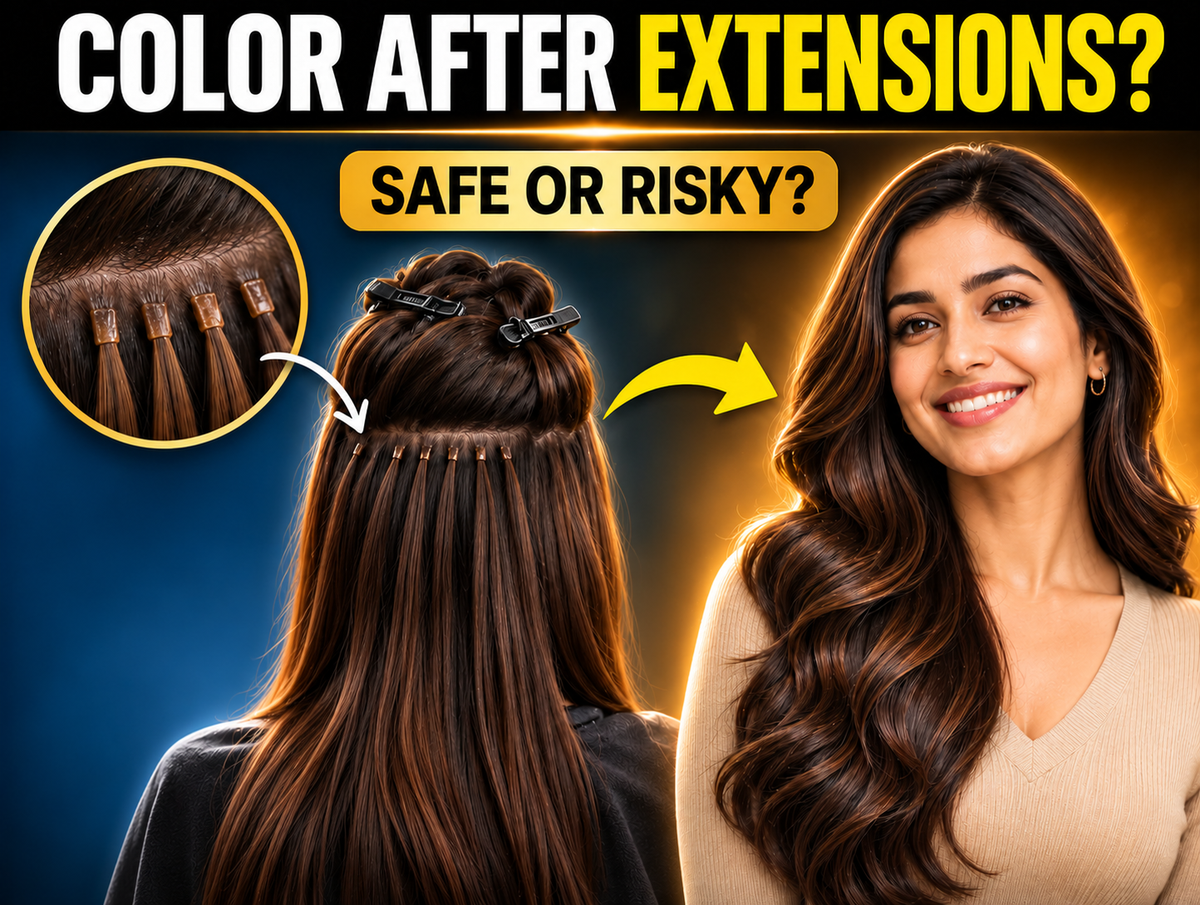
Permanent hair extensions are a popular choice for women who want fuller, longer hair without changing their everyday styling routine. They blend with natural hair and can create a consistent appearance for daily wear. However, if you regularly color your hair, cover gray roots, or occasionally change your shade, you may wonder whether coloring is possible once the extensions are installed.
The answer is yes, but coloring hair with permanent extensions requires additional care. The attachment method, type of coloring treatment, and condition of your natural hair all influence the process. Understanding these factors can help you maintain a natural-looking color while minimizing unnecessary stress on your hair and extensions.
| Table of Content |
Can You Color Your Hair With Permanent Extensions Installed?
Yes, you can color your natural hair while wearing permanent hair extensions, but the process requires careful application. Since permanent extensions are attached close to the roots, coloring products must be applied without unnecessarily disturbing the attachment points. The possibility of coloring depends mainly on the type of color service you want. A simple root touch-up may be easier to manage than a complete color transformation. For instance, covering newly grown gray roots may only require coloring accessible sections of your natural hair, while changing from dark brown to blonde involves more extensive chemical processing.
Permanent extensions are designed to remain attached during everyday activities, but their attachment systems can react differently to coloring products. Tape-in extensions use adhesives, micro ring extensions rely on small rings, and keratin bond extensions use individual bonding points. Each method requires a slightly different approach when coloring. Another important consideration is whether you want to color your natural hair or the extension hair itself. Although human hair extensions can sometimes be colored, their previous processing may affect how they absorb pigment.
For this reason, a professional colorist should assess your extensions before beginning any chemical treatment. The goal is to achieve the desired shade while preserving the appearance and security of the extensions.
How Hair Coloring Affects Permanent Hair Extensions?
Hair coloring involves chemical processes that deposit, alter, or remove pigment from the hair. While these treatments are commonly performed on natural hair, extensions may react differently depending on their condition and processing history.
How Human Hair Extensions Respond to Color
Human hair extensions are made from real hair, but they may have undergone previous coloring or other treatments before installation. This processing can influence how they respond to additional chemicals. For example, extensions that have already been lightened may absorb darker pigments unevenly or become dry after further coloring. Even when the desired shade is achieved, repeated chemical treatments can affect the hair's softness, manageability, and texture.
Because extension hair does not receive the same direct supply of natural scalp oils as growing hair, maintaining moisture and minimizing unnecessary processing are especially important. Choosing extensions that already match your preferred hair color can reduce the need for additional chemical treatment.
Can Hair Dye Affect Extension Attachments?
Coloring products may affect attachment points when applied directly to them or when incompatible products are used. Tape-in adhesives can be sensitive to certain chemicals, while keratin bonds may be affected by inappropriate product exposure or handling. Micro rings do not depend on adhesives, but careful application is still necessary to prevent product buildup and unnecessary tension. These considerations do not mean coloring is impossible. They simply make controlled application and proper sectioning important.
Can Coloring Change the Appearance of Extensions?
Yes. If your natural hair and extensions respond differently to the coloring process, the final shades may not match perfectly. For example, your natural hair may develop a warmer tone while the extensions retain their original shade. This difference can become noticeable around the mid-lengths and ends. Color matching, appropriate product selection, and controlled processing help maintain a consistent blend between your natural hair and extensions.
Coloring Tape-In, Micro Ring, and Keratin Bond Extensions
Different permanent hair extension methods use unique attachment systems, so coloring precautions vary depending on how the extensions are secured. Understanding these differences helps protect the attachment points and maintain a natural-looking result.
Tape-In Hair Extensions
Tape-in hair extensions use thin adhesive tabs to secure sections of extension hair close to the scalp. When coloring, it is important to prevent dye from coming into direct contact with the adhesive, as certain chemicals may weaken its hold and cause the extensions to loosen or slip. Root touch-ups may be possible when the colorist carefully separates the natural hair and works around the tape sections. However, for extensive coloring, highlighting, or significant lightening, temporarily removing the extensions may allow more even color application.
Micro Ring Hair Extensions
Micro ring hair extensions use small rings to attach extension strands to natural hair without adhesives or bonding chemicals. Although this attachment method may allow root coloring while the extensions remain installed, careful application is still necessary. The stylist should avoid pulling or placing excessive tension on the rings while separating the hair. Coloring products must also be rinsed thoroughly to prevent residue from collecting around the attachments. Proper sectioning and gentle handling help maintain the extensions' security during the coloring process.
Keratin Bond Hair Extensions
Keratin bond extensions are secured using individual bonding points that attach extension strands to natural hair. These bonds require special attention during coloring because direct exposure to certain chemical products may affect their strength and stability. A professional colorist may be able to perform minor root touch-ups by carefully applying color around the bonded sections. However, extensive coloring or major shade changes can be more challenging with the bonds in place. In such cases, temporarily removing the extensions before coloring may provide better access and help achieve a more consistent result.
Can You Color Your Roots Without Removing Extensions?
Root touch-ups are a common concern for women wearing permanent hair extensions. As natural hair grows, the original root color becomes visible, creating a noticeable difference, especially for women who regularly cover gray hair or maintain a different shade. Fortunately, root coloring can often be done without removing the extensions, provided the attachment points are handled carefully.
How Root Touch-Ups Work
During a root touch-up, the colorist carefully separates the natural hair into small sections and applies color to the visible roots while avoiding the extension attachment points. This process requires precision because direct contact with certain coloring products may affect tape adhesives or keratin bonds, while micro rings need careful handling to prevent product buildup. Extensions positioned close to the scalp can also make some roots harder to access, which may affect how evenly the color is applied. An experienced colorist can adjust the sectioning and application technique based on the extension method and placement to achieve consistent coverage without unnecessarily disturbing the attachments.
Can You Cover Gray Hair With Extensions?
Yes, gray hair coverage is often possible while wearing permanent hair extensions, especially around the hairline, parting, and other visible areas where natural roots are easily accessible. However, gray strands located beneath closely positioned extensions may be more difficult to reach, making even coverage challenging. The colorist may need to work with smaller sections and apply the color carefully to avoid contact with the attachment points. The appropriate technique depends on the amount of gray hair, extension placement, and desired shade. Professional application can help create a more uniform appearance while maintaining the extensions' security.
When Should Extensions Be Removed?
Permanent hair extensions do not always need to be removed for routine root touch-ups or minor gray coverage. However, temporary removal may be necessary when attachment points prevent proper access to the natural roots or when extensive coloring, highlighting, or significant lightening is planned. In these situations, removing the extensions allows the colorist to work more freely and apply color evenly throughout the hair. If your extensions are already due for repositioning or maintenance, coordinating the coloring service with that appointment can be a practical choice. This allows the natural hair to be colored before the extensions are professionally reinstalled, helping maintain a consistent shade and natural-looking blend.
Can You Make Other Color Changes Without Removing Extensions?
Minor color adjustments, root touch-ups, and gray coverage may be possible while permanent hair extensions remain installed. However, more noticeable color changes require careful planning because natural hair and extension hair may respond differently to coloring products. Differences in previous chemical processing, hair texture, and existing color can influence the final shade, making it difficult to achieve a consistent result across both. Coloring products must also be kept away from attachment areas when they could affect the bonding materials or interfere with the extensions' security. For significant color transformations, temporarily removing the extensions or choosing extension hair that already matches the desired shade may be more appropriate than repeatedly processing the installed extensions.
How Soon After Installation Can You Color Your Hair?
There is no universal waiting period for coloring hair after permanent extension installation. The appropriate timing depends on the extension method, attachment materials, and type of coloring treatment. For example, tape-in adhesives and keratin bonds may require additional precautions during chemical processing. Following the manufacturer's care instructions and consulting an experienced colorist can help determine when coloring is appropriate while minimizing unnecessary stress on your natural hair and extensions.
Precautions When Coloring Hair With Extensions
Coloring hair with permanent extensions requires additional care because chemical treatments can affect both natural hair and extension attachments. Following the right precautions can help minimize damage, prevent uneven coloring, and maintain the appearance and security of your extensions.
Choose a Colorist Familiar With Extensions
An experienced colorist understands how to work with tape-in, micro ring, and keratin bond extensions. Since each method has different attachment points, the coloring technique must be adjusted accordingly. Before the service, inform your stylist about your extension type, installation history, and previous coloring treatments. This helps them choose suitable products and apply color without unnecessarily disturbing the extensions.
Protect the Attachment Points
Coloring products should be kept away from extension attachments unless specifically approved by the manufacturer. Certain chemicals may weaken tape adhesives or keratin bonds, while micro rings require careful handling to prevent product buildup and unnecessary tension. Proper sectioning and precise color application can help maintain attachment security and reduce the possibility of loosening or slippage.
Be Careful With Bleaching
Bleaching requires particular caution because it removes pigment through chemical processing, which can weaken the hair. Human hair extensions may already have undergone coloring or lightening, making them more vulnerable to dryness, breakage, and uneven results. If you want a significantly lighter shade, consult an experienced colorist to determine whether your existing extensions can tolerate further processing or whether a different extension shade would be more suitable.
Consider a Strand Test
Before coloring human hair extensions, a strand test can help determine how the hair responds to the selected coloring product. Testing a small section may reveal unexpected color absorption, dryness, texture changes, or uneven tones. This is particularly important for previously processed extensions, as they may react differently from your natural hair. Although a strand test cannot guarantee identical results throughout, it can help identify potential concerns before full application.
Maintain Your Extensions After Coloring
Proper aftercare helps preserve the softness, manageability, and natural appearance of color-treated extensions. Use hair care products compatible with your extension method and color-treated hair. Apply conditioning products to the lengths while avoiding attachment areas where product contact is not recommended. Detangle gently, limit excessive heat styling, and avoid pulling on the bonds or rings. If your extensions begin slipping, tangling excessively, or feeling unusually dry after coloring, have them professionally assessed.
Frequently Asked Questions About Coloring Permanent Extensions
Q. Can you dye permanent hair extensions while they are attached?
Some human hair extensions can be colored while installed, depending on their previous processing and attachment method. However, coloring products should be applied carefully to avoid compromising the attachments. Professional guidance is recommended before proceeding.
Q. Can you bleach your hair with permanent extensions?
Bleaching requires particular caution because strong lightening treatments can affect both natural hair and previously processed extensions. For significant lightening, removing extensions before coloring may be more appropriate.
Q. Can you cover gray roots with tape-in hair extensions?
Yes, gray root coverage may be possible when the natural hair can be accessed without exposing tape adhesives to coloring products. The feasibility depends on extension placement and the amount of root coverage required.
Q. Will hair coloring cause permanent extensions to fall out?
Hair coloring does not automatically cause extensions to detach. However, incompatible products, improper application, or unnecessary disturbance of attachment points may contribute to loosening or slippage.
Q. Can you color human hair extensions darker?
Some human hair extensions can accept darker color, but the results depend on their previous processing and condition. A professional assessment and strand test can help determine whether coloring is appropriate.
Q. Can you use toner on permanent hair extensions?
Toning may be possible for certain human hair extensions, but the product must be compatible with the hair and attachment method. Previously processed extensions may absorb toner differently from natural hair, potentially causing uneven shades.
Q. Can you completely change your hair color while wearing extensions?
A complete color transformation requires careful planning because the natural hair and extensions may respond differently. Temporary removal or replacement of extension hair may be preferable when the desired shade differs significantly from the existing color.
Conclusion
Coloring your hair after getting permanent hair extensions is possible, but the approach depends on the attachment method, existing hair condition, and type of color change. Root touch-ups and gray coverage may be manageable with extensions installed, while major color transformations often require additional preparation.
Whenever possible, plan significant hair color changes before extension installation or coordinate them with scheduled extension maintenance. Careful color matching, professional application, and suitable aftercare can help maintain a natural-looking blend while minimizing unnecessary stress on your natural hair and extensions.
Have questions about your hair loss journey? 📞+91 9967123333 Call us today, and we'll guide you to the best solution tailored to your needs. Your perfect hair transformation starts with a conversation!
Want volume that looks real and feels light?
We’ll help you pick the perfect extensions based on your goals and hair texture.
👉 [Fill out the form for customised recommendations.]
Read more
Why Do Some Hair Toppers Look Bulky Near the Hairline?
Hair toppers are designed to provide coverage and fullness in areas where natural hair has become thin, particularly around the parting and crown. However, some women notice that their hair topper ...
Read moreneed help?


Leave a comment
This site is protected by hCaptcha and the hCaptcha Privacy Policy and Terms of Service apply.