

Can Hair Toppers Help Women With Alopecia Feel More Confident?
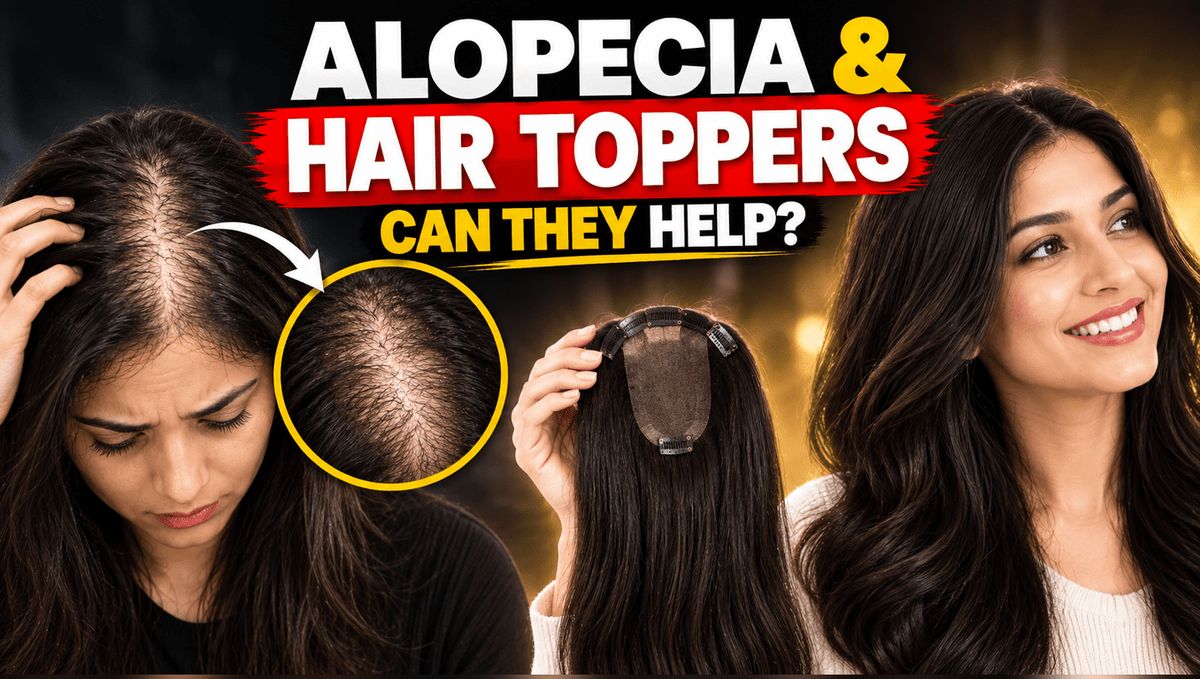
Hair can be closely connected to identity, personal style, and the way you feel about your appearance. When alopecia causes visible thinning or hair loss, especially around the top or crown, everyday situations such as getting ready for work, attending social events, or taking photographs may begin to feel different. Some women become more conscious of visible scalp or find themselves repeatedly adjusting their hairstyle to create the appearance of fuller hair.
Hair toppers offer a cosmetic way to provide targeted coverage without attempting to treat the underlying cause of alopecia. They can add density to areas where natural hair has become sparse and help create a hairstyle that feels more familiar. For some women, having that additional coverage may reduce appearance-related worries and help them feel more comfortable in everyday situations.
| Table of Content |
Understanding Alopecia and Its Emotional Impact
Alopecia is a broad term used for hair loss, and it does not look the same for every woman. Hair loss may appear in specific areas, involve gradual thinning, or affect larger portions of the scalp. Because both the cause and pattern can vary, women experiencing alopecia may have very different needs when considering a cosmetic hair solution. The emotional experience can also vary. For some women, hair loss is mainly a styling concern, while others may feel increasingly self-conscious about their appearance. Situations that once felt routine can sometimes bring additional attention to the hair.
Common appearance-related concerns may include:
- Visible scalp around the parting or crown
- Difficulty creating previously familiar hairstyles
- Feeling conscious under bright or overhead lighting
- Worrying about hair in photographs or videos
- Spending extra time arranging hair over sparse areas
- Feeling less comfortable in social or professional situations
A hair topper does not treat alopecia or cause natural hair to regrow. Instead, it provides additional hair and coverage over selected areas. For women whose alopecia affects an area that can be appropriately covered by a topper, this cosmetic option may help them feel more comfortable with their appearance.
How Hair Toppers Work for Women With Alopecia
A hair topper is designed to provide coverage over a specific portion of the scalp rather than covering the entire head. The base sits over the area where additional coverage is required, while the topper hair is blended with the woman's remaining natural hair. This makes hair toppers particularly relevant when thinning is concentrated around the top, parting, or crown. However, simply choosing a topper is not enough. The coverage area needs to correspond with the actual pattern of hair loss. A topper that is too small may leave sparse areas exposed, while choosing more coverage than necessary may make blending and styling more difficult.
When considering hair toppers for alopecia, several factors deserve attention:
- Location and extent of the thinning area
- Amount of natural hair surrounding the area
- Base size and coverage
- Hair density
- Color and texture
- Attachment method
- Overall comfort
The remaining natural hair can be particularly important with toppers that attach using clips. There needs to be suitable hair in appropriate areas for attachment without placing unnecessary tension on vulnerable sections. Alopecia can also change over time. If the area of hair loss becomes larger or moves beyond the original coverage area, the topper may need to be reassessed rather than relying solely on styling to disguise the change.
How Hair Toppers May Support Everyday Confidence
Confidence is highly personal, so a hair topper cannot guarantee that someone will feel more confident. What it can do is address one visible concern that may be contributing to self-consciousness. When a topper provides appropriate scalp coverage and integrates naturally with existing hair, some women may find themselves thinking less about their thinning areas throughout the day. This can be especially meaningful when hair loss has changed a familiar hairstyle. Rather than creating dramatically thicker hair, a woman may simply want to recreate the visual density she previously associated with herself.
A suitable topper may help with concerns such as:
- Creating fuller-looking coverage over thinning areas
- Reducing the visibility of the scalp
- Restoring balance around the top and crown
- Making familiar hairstyles easier to recreate
- Feeling more comfortable when taking photographs
- Reducing worry about how thinning areas appear to others
For a professional woman, the benefit may be feeling less distracted by her hair during meetings or presentations. For someone attending a family gathering, it may simply mean spending less time thinking about whether a sparse area is visible. There is no requirement to conceal alopecia. Some women prefer coverage, while others are comfortable showing their natural hair loss. Hair toppers simply provide another option for women who personally feel more comfortable adding coverage and density.
Choosing a Natural-Looking Hair Topper for Alopecia
One of the biggest concerns women have when considering a hair topper is whether other people will notice it. A natural-looking result does not depend on one feature alone. Coverage, color, texture, density, base design, placement, and styling all contribute to how successfully a topper integrates with natural hair. The first priority should usually be appropriate coverage. Once you understand which areas need coverage, you can consider the characteristics that influence the finished appearance.
Coverage
The topper should adequately cover the area of concern without relying on complicated styling to conceal areas beyond its base. Crown thinning, widening around the part, and more extensive thinning may require different amounts of coverage.
Color
A close color relationship between the topper and your existing hair helps create continuity. Natural hair often contains several tones, so matching the overall appearance is more important than focusing on one individual strand.
Texture
The topper's texture should work naturally with your existing hair. If the topper and natural hair behave very differently, blending can become more difficult even when the color is accurate.
Density
More density does not automatically mean a more convincing result. The amount of hair should appear proportionate to the surrounding natural hair and provide sufficient coverage without creating an abrupt difference.
Base Appearance
The base influences how the topper sits on the scalp and how the parting area appears. Different base constructions can create different visual effects, so this feature should be considered alongside comfort and coverage.
Human hair toppers can provide styling flexibility and may integrate naturally when appropriately selected. However, using human hair alone does not guarantee a seamless appearance. Correct sizing, placement, blending, density, and styling remain equally important.
Comfort, Fit, and Attachment Considerations
A topper may look natural but still be unsuitable if it does not feel comfortable or secure. This becomes particularly important for women who plan to wear their hair toppers regularly or for extended periods. Comfort should therefore be considered alongside appearance rather than treated as an afterthought. Some hair toppers use clips that attach to existing hair. With alopecia, the location and condition of that remaining hair need careful consideration because sparse or fragile areas may not be appropriate places for repeated attachment.
Important comfort and fit considerations include:
- The topper should feel balanced rather than excessively tight.
- Attachment points should not create persistent pulling.
- Clips should not repeatedly rely on particularly weak areas.
- The topper should remain comfortable during normal daily movement.
- The base should provide enough coverage without feeling unnecessarily large.
- Persistent irritation or scalp discomfort should not be ignored.
It is also useful to consider comfort over several hours rather than judging it only immediately after application. A topper that initially feels fine may feel different during a long workday or extended social event.
If the scalp is sensitive, irritated, painful, or undergoing noticeable changes, those concerns should be evaluated separately from the cosmetic decision to wear a topper. Hair toppers provide appearance-related coverage; they are not a substitute for appropriate professional evaluation of alopecia or scalp concerns.
When a Hair Topper May Not Be the Right Choice
Hair toppers can be useful for certain patterns of hair loss, but they are not automatically suitable for every woman with alopecia. Their effectiveness depends largely on where the hair loss occurs, how extensive it is, how the topper attaches, and whether there is enough suitable natural hair for blending and attachment.
A topper may require reconsideration when:
- Hair loss extends significantly beyond the topper's coverage area.
- There is insufficient suitable natural hair for the attachment method.
- Attachment repeatedly causes uncomfortable pulling or tension.
- The scalp becomes irritated or uncomfortable while wearing the topper.
- Hair loss changes and the existing topper no longer provides sufficient coverage.
- A woman requires substantially more scalp coverage than a conventional topper is designed to provide.
Lifestyle also matters. Someone wearing a topper occasionally may have different priorities from someone planning to wear one throughout the working day. Styling habits, application preferences, maintenance expectations, and comfort requirements should all be considered.
Most importantly, a topper should remain a personal cosmetic choice. Alopecia does not mean that a woman needs to conceal her hair loss. The purpose of considering a topper is to determine whether additional coverage would make her personally feel more comfortable not to establish how she should look.
Frequently Asked Questions About Hair Toppers and Alopecia
Can you wear a hair topper if you have alopecia?
It may be possible depending on the location and extent of the hair loss, the condition of the remaining natural hair, and the attachment method. The appropriate solution can vary considerably between individuals with alopecia.
What areas can a hair topper cover?
Hair toppers are commonly used to provide additional coverage around the top, parting, or crown. The appropriate base size depends on how large the thinning area is and where coverage is needed.
Can a hair topper look natural?
A carefully selected topper can integrate closely with existing hair. Color, texture, density, base construction, coverage, placement, and styling all influence how natural the finished appearance looks.
Are human hair toppers suitable for women with alopecia?
Human hair toppers may be an option for some women with alopecia when the topper's coverage and attachment are appropriate for their individual hair-loss pattern. Hair type is only one consideration; fit, security, comfort, and blending also matter.
Can I wear a hair topper every day?
Some women choose to wear toppers regularly. If you plan on frequent wear, pay particular attention to attachment points, comfort, maintenance, and the condition of your remaining natural hair and scalp.
Can topper clips affect thinning hair?
Clips place some mechanical tension on the hair where they attach. When natural hair is already sparse or fragile, attachment locations should therefore be selected carefully rather than repeatedly placing tension on vulnerable areas.
Will a hair topper help alopecia improve?
A hair topper is a cosmetic solution for adding coverage and the appearance of density. It does not treat the underlying cause of alopecia or guarantee natural hair regrowth.
Conclusion
Hair toppers can provide women with certain patterns of alopecia a practical way to manage visible thinning, particularly around the top, parting, and crown. By adding targeted coverage and density, a suitable topper may help reduce some of the appearance-related concerns that make a woman feel self-conscious in photographs, professional situations, social gatherings, or everyday life.
The right choice depends on much more than simply finding a topper with enough hair. Coverage, density, color, texture, attachment, comfort, and the condition of the remaining natural hair all matter. When these factors are considered carefully, a hair topper can become an appearance option that helps a woman style her hair in a way that feels more familiar and comfortable to her.
Not sure where to begin with hair loss solutions? 📞+91 9967123333 Contact us now, and let our experts recommend the ideal choice for you. Personalized advice is just a call away!
Hair thinning on top? Feeling conscious in photos or at work?
You’re not alone — and we’re here to help.
👉 [Fill this form and get guidance on choosing the right topper.]
Read more
Why Scalp Oiliness Affects Permanent Hair Extensions and How to Manage It
Permanent hair extensions are chosen by many women who want added length, volume, or a fuller hairstyle that fits naturally into their daily routine. While factors like hair texture, extension type...
Read more
Why Is Your Wig Shedding? What’s Normal and What’s Not
Finding a few strands of hair in your brush after wearing or styling a wig can be unsettling. If you have invested time in choosing a wig that looks natural and feels like part of your everyday app...
Read moreneed help?


Leave a comment
This site is protected by hCaptcha and the hCaptcha Privacy Policy and Terms of Service apply.