

Article: Can a Wig Be Too Dense? How to Choose Natural Wig Density for Indian Faces
Can a Wig Be Too Dense? How to Choose Natural Wig Density for Indian Faces
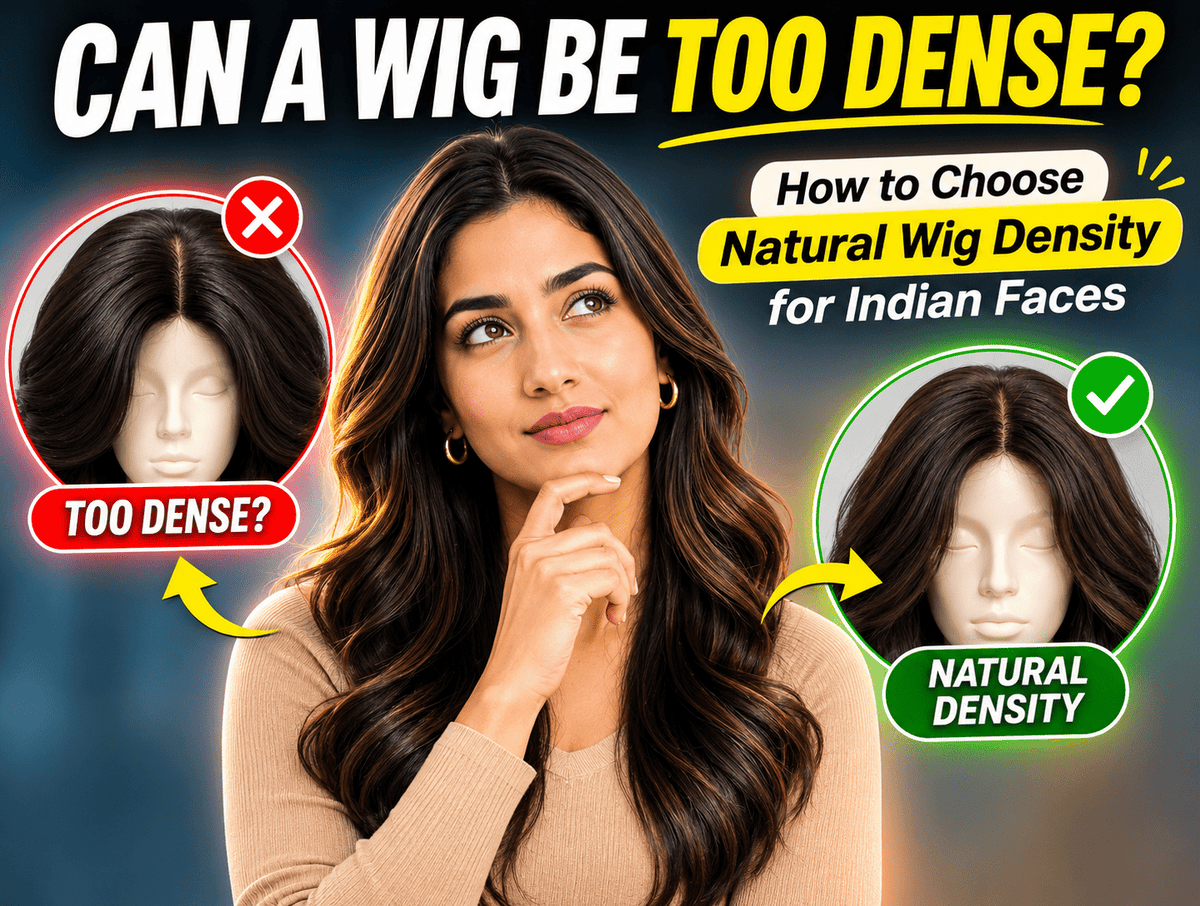
When choosing a wig, most women focus on hair length, color, and texture. However, wig density is equally important in determining how natural the wig looks. Density refers to the amount of hair attached to the wig cap, affecting its fullness, volume, and overall appearance. While thick hair can look beautiful, excessive density may sometimes make a wig appear bulky around the hairline and crown.
For Indian women, choosing natural wig density involves considering face shape, hair texture, preferred hairstyle, and daily comfort. A density that looks balanced on one person may appear too heavy on another. Understanding these differences can help you choose a human hair wig that complements your facial features without creating unnecessary volume.
| Table Of Content |
What Is Wig Density, and Why Does It Matter?
Wig density describes the amount of hair attached to a wig cap. It influences how thick or full a wig appears and how the hair falls around your face. Manufacturers commonly use percentages such as 130%, 150%, and 180% to describe different fullness levels. However, these percentages are not universally standardized, meaning two wigs with the same density label may look different.
Natural hair also varies in density across the scalp. The hairline is generally softer, while other areas may contain greater fullness. A natural-looking wig should reflect this variation rather than having uniformly thick hair throughout.
Density influences several important characteristics:
- Balanced fullness helps the wig resemble naturally growing hair.
- Hair volume can change how your face appears.
- Density affects how easily hair can be parted, layered, or styled.
- Additional hair may increase weight and warmth during extended wear.
Choosing the appropriate density is therefore about achieving the desired appearance rather than simply selecting more hair.
Can a Wig Be Too Dense? Signs of Excessive Fullness
Yes, a wig can be too dense for your preferred hairstyle or facial proportions. Although fuller hair is not inherently unnatural, excessive volume may make the wig appear heavier than intended. One common sign is an unusually thick hairline. Natural hairlines generally have a gradual transition into fuller hair. When too much hair is concentrated near the forehead, the front may appear less realistic.
Another indication is excessive bulk around the crown. This can make the wig appear raised, particularly with straight hairstyles designed to sit relatively close to the head. You may also notice that the hair overwhelms your facial features. For example, excessive side volume can visually widen a round face, while very thick hair around the jawline may change the proportions of a square face.
Styling difficulties can also indicate excessive density. A very full wig may require additional shaping to create a natural part or achieve relaxed movement. However, high density does not automatically mean an unnatural appearance. Women with naturally thick hair may prefer fuller wigs. The important consideration is how evenly the volume is distributed and whether it complements the intended hairstyle.
Understanding 130%, 150%, and 180% Wig Density
Wig density percentages indicate how full or thick a wig may appear. Common options like 130%, 150%, and 180% offer different levels of volume, from soft, natural-looking fullness to thicker hairstyles. The right density depends on your face shape, hair texture, and styling preferences.
| Wig Density | How It Looks | Best Suited For | Things to Keep in Mind |
| 130% Density | Light to moderate fullness with a soft, natural appearance | Women who prefer understated hairstyles or want a wig that resembles naturally fine to medium-density hair | Often works well for short to shoulder-length styles and straight textures. In longer wigs, the ends may sometimes look less full depending on construction. |
| 150% Density | Balanced, everyday fullness with visible body and movement | Women who want a natural look with a bit more volume | Works well with straight, softly waved, and layered hairstyles. For many Indian women used to medium or thick hair, this density can feel familiar and versatile. |
| 180% Density | Fuller and more voluminous overall look | Women who naturally have thick hair or prefer more dramatic fullness, especially in longer or layered styles | Can sometimes look bulky around the hairline or crown. It may also feel heavier and require more styling effort. |
The right wig density depends on your personal style, hair texture, face shape, and the wig’s construction. While higher density creates a fuller, thicker appearance, it does not always look more natural. Choosing a density that balances volume with your facial features and preferred hairstyle can help achieve a realistic, comfortable look for everyday wear.
Choosing Wig Density for Different Indian Face Shapes
Indian women have diverse facial features, so no single wig density suits everyone. Face shape provides useful guidance, but layering, parting, and hair length also influence the final appearance.
Round Faces
Round faces generally have soft contours and similar facial width and length proportions. Moderate-density wigs with controlled side volume can create a balanced look. Excessive fullness around the cheeks may emphasize facial width, while longer layers or a side part can help distribute volume more naturally.
Oval Faces
Oval faces can accommodate many hairstyles and density levels. Both 130% and 150% density wigs may create a balanced everyday appearance. Fuller options, such as 180%, can also work when the hairstyle includes suitable layering and shaping. Rather than selecting density based on face shape alone, consider your usual hair volume and styling preferences.
Square Faces
Square faces often feature a defined jawline and angular contours. Soft waves and gentle layers can complement these features. Moderate density may help create movement without concentrating too much volume around the jaw. A fuller wig can also work when its shape distributes the hair naturally.
Heart-Shaped Faces
Heart-shaped faces typically have a wider forehead and narrower chin. Excessive volume near the temples may emphasize the upper face. Moderate density with soft layers or fullness toward the lower lengths can create a more balanced appearance.
Long or Rectangular Faces
Longer faces may benefit from hairstyles that add gentle volume around the sides rather than excessive height at the crown. Medium-density wigs with waves or face-framing layers can help balance facial proportions. The placement of volume often matters more than the density percentage itself. Ultimately, natural wig density should complement your facial features rather than follow a fixed rule based on face shape.
How Hair Texture, Length, and Hairline Affect Density
Wig density does not determine appearance independently. Hair texture, length, and hairline construction can make two wigs with similar density labels look noticeably different.
Hair Texture
Straight hair generally falls closer to the head, making its density easier to assess. Wavy hair creates additional movement and visual fullness, while curly textures naturally occupy more space. As a result, a moderately dense curly wig may appear fuller than a straight wig with a higher density label.
Hair Length
Short hairstyles concentrate more visible volume around the head, so excessive density may create unnecessary bulk. Long wigs distribute hair across greater lengths. Depending on the layering and construction, additional density may help maintain fullness toward the ends. However, there is no universal density requirement for a specific hair length.
Hairline Appearance
A realistic hairline plays an important role in making a wig look natural. Natural hairlines generally feature gradual density changes rather than a sharply defined wall of hair. Excessive fullness at the front may make the wig more noticeable, especially when styled away from the face. A softer hairline, appropriate parting, and balanced crown volume can create a more convincing appearance than density alone.
Finding the Right Balance Between Volume and Comfort
Choosing natural-looking wigs involves considering both appearance and everyday practicality. Start by thinking about your preferred hairstyle. If you usually wear smooth, understated hair, a moderate-density wig may feel more familiar. If you naturally have thick hair or enjoy fuller hairstyles, additional density may better match your preferences. Comfort is another consideration, particularly in India's warm and humid weather. Higher-density wigs generally contain more hair, which may increase warmth and weight. However, cap construction, fit, and ventilation also influence comfort.
When assessing a wig, consider the following:
- Does the hairline look soft and realistic?
- Does the crown sit naturally?
- Does the volume complement your face?
- Does the hair fall naturally when parted or styled?
- Does the wig feel comfortable during wear?
If a wig appears too full, a trained wig stylist may sometimes reduce bulk through careful layering or thinning. However, removing excessive hair can permanently affect its appearance, so choosing an appropriate density initially is preferable. The goal is to find a wig that provides enough fullness for your preferred hairstyle without creating unnecessary weight or volume.
Frequently Asked Questions About Wig Density
Q. What wig density looks most natural for Indian women?
A. Many women find 130% or 150% density suitable for natural-looking hairstyles. However, the right choice depends on individual hair texture, facial features, and preferred volume.
Q. Is 180% wig density too thick for everyday wear?
A. Not necessarily. A 180% density wig may suit women who naturally have thick hair or prefer fuller hairstyles. However, it can feel excessive if you want a lighter, understated look.
Is 130% or 150% density better for beginners?
A. Both can work well. A 130% wig generally provides lighter fullness, while 150% offers additional volume. Comparing the actual wigs is more useful than relying only on percentage labels.
Does higher wig density make a wig look more natural?
A. No. A realistic appearance depends on hairline construction, texture, volume distribution, and styling. Higher density may sometimes create unnecessary bulk.
Does wig density affect comfort?
A. Yes. Additional hair may increase weight and warmth, although cap construction and fit also influence how comfortable a wig feels.
Can a thick wig be made thinner?
A. Some human hair wigs can be carefully thinned or layered by an experienced wig stylist. However, excessive thinning may create uneven volume or expose the underlying cap.
Conclusion
Choosing the right wig density is about balancing natural appearance, facial proportions, and everyday comfort. While 130%, 150%, and 180% density wigs offer different levels of fullness, the most suitable option depends on your hair texture, face shape, and preferred hairstyle.
For Indian women, a natural-looking wig does not necessarily need maximum volume. Thoughtful hair distribution, a realistic hairline, and appropriate styling are often more important than density percentage alone.
Not sure where to begin with hair loss solutions? 📞+91 9967123333 Contact us now, and let our experts recommend the ideal choice for you. Personalized advice is just a call away!
Losing your hair during treatment can feel overwhelming.
We’re here to help you feel like you again.
👉 [Fill this form to get expert help finding the right wig.]
Read more
Can You Color Your Hair After Getting Permanent Hair Extensions?
Permanent hair extensions are a popular choice for women who want fuller, longer hair without changing their everyday styling routine. They blend with natural hair and can create a consistent appea...
Read moreneed help?


Leave a comment
This site is protected by hCaptcha and the hCaptcha Privacy Policy and Terms of Service apply.