

Article: Can a Hair Topper Make Thin Hair Look Fuller and Thicker?
Can a Hair Topper Make Thin Hair Look Fuller and Thicker?
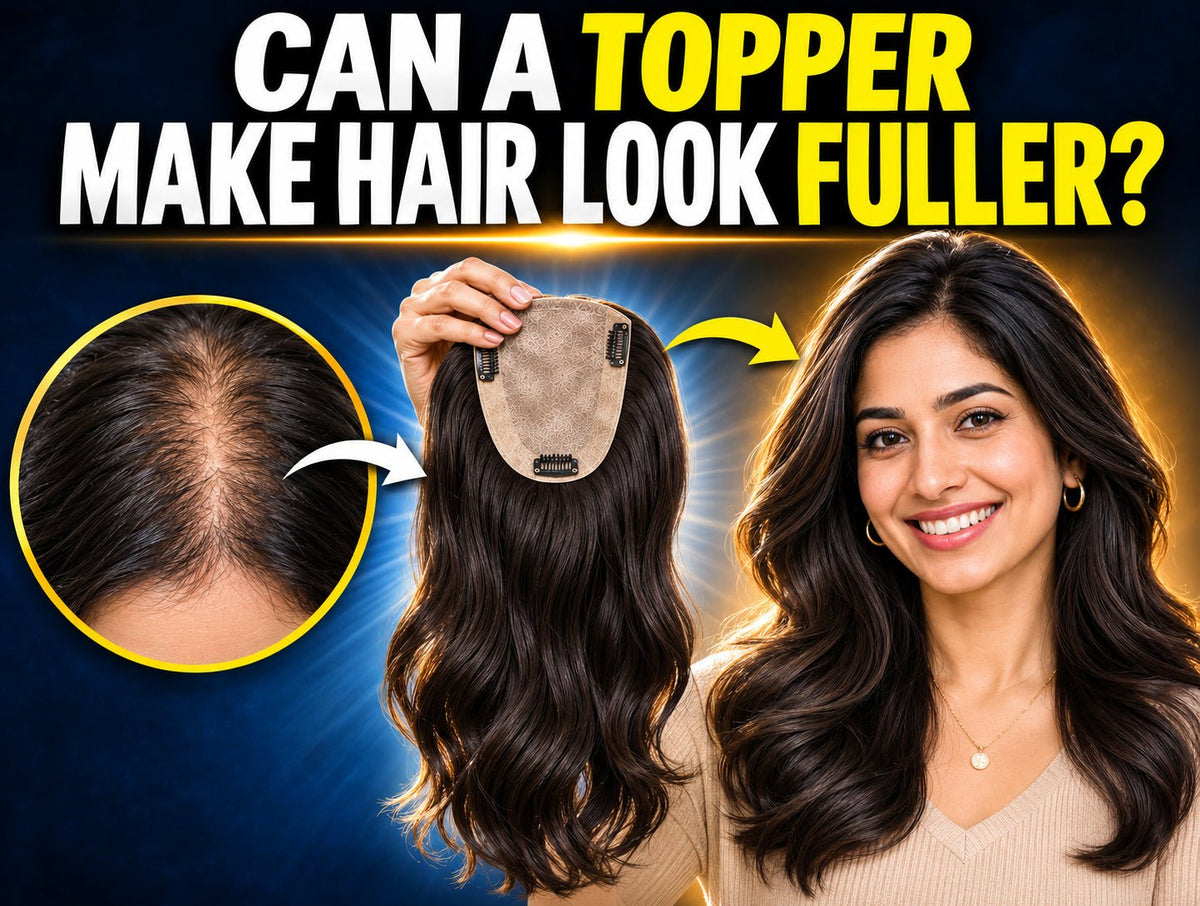
Thin hair can make it difficult to achieve the volume and fullness you want, particularly around the crown and parting area. As hair density decreases, the scalp may become more visible, and hairstyles that once looked naturally full may begin to appear flat. For many women, this creates a desire for a simple solution that improves the appearance of their hair without completely changing their hairstyle.
A hair topper can help create the appearance of thicker, fuller hair by adding volume and coverage where it is needed most. Designed to blend with your existing hair, it provides a natural-looking enhancement while allowing you to maintain your preferred hairstyle. Understanding how hair toppers work, who they suit, and how to choose the right one can help you achieve a balanced and realistic result.
| Table of Content |
What Is a Hair Topper and How Does It Work?
A hair topper is a partial hairpiece designed to add volume, density, and coverage to areas where natural hair appears thin or sparse. It is typically worn over the crown or parting area, where thinning hair can make the scalp more visible. A hair topper covers specific areas while blending with the surrounding natural hair to create a fuller appearance. Hair toppers for thinning hair work by adding hair strands over areas with reduced density, helping conceal visible scalp and create the appearance of thicker hair. They are available in different base sizes, lengths, textures, and densities to suit individual coverage needs and hairstyles.
Most removable hair toppers use small clips to secure the base to natural hair. Once attached, the added strands blend with the existing hair for a natural-looking finish. Human hair toppers also offer styling flexibility, making it easier to match your preferred hairstyle. The base construction influences how natural the topper looks. Skin hair toppers imitate the appearance of a scalp, while silk hair toppers use a layered base to conceal hair attachment points. Choosing the right color, density, and base size helps achieve a balanced, fuller-looking hairstyle without excessive volume.
Hair toppers can be especially useful when thinning is concentrated around the top of the head rather than spread evenly across the scalp. They allow women to add fullness exactly where it is needed while maintaining the natural length and movement of their existing hair. Another important benefit is the flexibility they offer for everyday styling. A properly fitted topper can be removed when needed and styled to complement different hairstyles. With suitable placement and gentle handling, it can provide a comfortable way to maintain a fuller-looking hairstyle during daily activities.
How Can a Hair Topper Make Thin Hair Look Fuller and Thicker?
Yes, a hair topper can make thin hair appear fuller and thicker by adding volume and coverage to areas with reduced hair density. It helps conceal visible scalp areas, improves the overall shape of the hairstyle, and creates the appearance of naturally fuller hair. Although a topper does not change natural hair growth or strand thickness, it can enhance how your hair looks when properly selected and blended.
Here are the main ways a hair topper helps create a fuller and thicker appearance:
Adds Volume Around the Crown
Thin hair often appears flat around the crown because there are fewer strands creating natural fullness. A hair topper adds extra hair to this area, helping create visible volume and lift. Hair toppers for volume are particularly useful for women who want a fuller appearance without making a dramatic change to their existing hairstyle.
Reduces Visible Scalp Areas
As hair becomes thinner, the scalp may become more noticeable, especially around the parting and crown. A hair topper provides additional coverage over these areas, reducing the appearance of gaps between natural hair strands. A well-designed topper base can also create a realistic-looking scalp and parting, making the added hair blend more naturally.
Creates a Fuller and More Balanced Hairstyle
Hair thinning can affect the overall shape of a hairstyle, particularly when the top appears flatter than the sides and back. By adding hair where fullness is lacking, a topper helps create a more balanced and evenly distributed appearance. Choosing the right hair density, length, and texture ensures the added volume complements your natural hair rather than looking excessively thick.
The effectiveness of a hair topper depends on proper selection and placement. When its color, density, and texture closely match your existing hair, it can create a natural-looking hairstyle with improved volume and coverage.
Who Can Benefit from Wearing a Hair Topper?
Hair toppers are a suitable option for women who want to improve the appearance of thinning hair, particularly around the crown, parting, or upper portion of the head. They provide additional volume and coverage while blending with existing hair to create a fuller, natural-looking hairstyle. Women experiencing gradual hair thinning, reduced density, or naturally fine hair may find hair toppers helpful for achieving their desired fullness. Available in different base sizes, hair lengths, and densities, they can be selected according to individual coverage needs while maintaining the natural appearance and movement of the existing hair.
Hair toppers can be particularly useful for:
- Hair toppers help cover thinning areas around the crown, reducing scalp visibility and creating a fuller appearance.
- A suitable topper provides coverage along the parting area, helping create a more natural and defined hair part.
- Lightweight hair toppers add volume and fullness to fine hair without making the hairstyle appear excessively bulky.
-
Hair toppers provide coverage for specific thinning areas while blending with the surrounding natural hair, provided suitable attachment is possible.
The suitability of a hair topper depends on the extent of thinning, the condition of the natural hair, and the coverage required. Choosing the right base size, hair density, texture, and attachment method helps achieve a comfortable fit and a balanced, natural-looking result. A properly selected topper should provide enough coverage without adding unnecessary weight or creating an obvious difference between the added hair and natural strands. For women with fragile or significantly thinning hair, careful placement and avoiding excessive tension at attachment points are particularly important for maintaining comfort during regular wear.
What Makes a Hair Topper Look Natural on Thin Hair?
A natural-looking hair topper should blend seamlessly with your existing hair, creating the appearance of fuller hair without looking artificial or excessively bulky. Several factors, including hair color, texture, density, base construction, and placement, influence how naturally the topper blends with your hairstyle. Choosing the right combination of these features helps achieve a balanced appearance while maintaining the natural movement and overall shape of your hair.
The key factors that make a hair topper look natural include:
- Matching the topper's color, undertones, and texture with your natural hair helps create a smooth blend without noticeable differences.
- Choosing balanced hair density adds the desired fullness without making the topper appear too thick or bulky compared to your natural hair.
- Skin hair toppers imitate the appearance of a natural scalp, while silk hair toppers use a layered base to conceal hair attachment knots and create a realistic-looking parting.
- Positioning the topper correctly over the thinning area helps prevent visible edges and creates a smooth transition between the added hair and natural strands.
The overall appearance of a hair topper depends on how well these elements work together. Even a topper with a realistic base may look noticeable if its color, density, or texture does not complement the surrounding hair. A properly selected and positioned topper should provide the required coverage while maintaining a natural hairstyle. Gentle styling and blending can further improve the result, helping the added hair move consistently with your existing strands.
How to Choose the Right Hair Topper for Fuller-Looking Hair?
Choosing the right hair topper involves understanding your thinning pattern, hairstyle, and comfort needs. A suitable topper should provide enough coverage and volume while blending naturally with your existing hair. Factors such as base size, hair density, length, and attachment method influence the overall appearance.
Here are the key factors to consider when choosing a hair topper:
- Determine whether thinning affects the crown, parting, or a larger area to choose a topper with suitable coverage.
- Choose a base that covers thinning areas while blending comfortably with your surrounding natural hair.
- Select a topper that complements your natural hair length and density to create balanced fullness without excessive volume.
- Consider the topper's weight, flexibility, and attachment method to ensure a secure fit without unnecessary pulling.
A well-chosen hair topper should create a natural-looking hairstyle without feeling heavy or uncomfortable. Matching its color, texture, and density with your existing hair helps achieve a seamless appearance. Proper placement and a comfortable attachment method are also important for maintaining a fuller-looking hairstyle during regular wear.
Tips for Wearing and Maintaining a Hair Topper
Proper placement and regular care help preserve a hair topper's appearance while reducing unnecessary stress on natural hair. When attaching a clip-in hair topper, position it carefully over the thinning area and secure the clips to suitable sections of hair. Avoid fastening clips directly onto fragile or sparse areas, as repeated tension may contribute to hair damage. After securing the topper, gently blend its strands with your natural hair using an appropriate brush or comb. Avoid aggressive brushing near the attachment points, particularly when the topper is being worn.
Human hair toppers may allow heat styling when permitted by their care instructions. Using moderate temperatures and minimizing excessive styling can help preserve the hair's condition. Cleaning frequency depends on how regularly the topper is worn and how much styling product is used. Gentle washing, appropriate drying, and careful storage help maintain its appearance. For daily wear, periodically checking the topper's placement is also important. A secure attachment should not cause headaches, persistent pulling, or scalp irritation.
Frequently Asked Questions About Hair Toppers for Thin Hair
Q. Can a hair topper make very thin hair look thicker?
Yes. A hair topper can add visible fullness and coverage to areas with reduced density. The final appearance depends on the topper's size, density, and how naturally it blends with the existing hair.
Q. Are hair toppers suitable for fine hair?
Hair toppers can suit fine hair when their weight, base size, and attachment method are appropriate. Lightweight designs with balanced density may help create fullness without overwhelming the natural hairstyle.
Q. Will a hair topper look obvious?
A properly matched topper can create a natural appearance. Hair color, texture, density, base construction, and placement all influence how discreetly it blends with your existing hair.
Q. Can I wear a hair topper every day?
Some hair toppers are suitable for regular wear when properly fitted and maintained. However, daily use requires attention to attachment points and natural hair tension to reduce the risk of discomfort or damage.
Q. Can a hair topper cover both crown thinning and a widening part?
Yes. A topper with an appropriately sized base can provide coverage across both areas. The base should extend over the thinning regions while allowing the added hair to blend with the surrounding strands.
Q. Does a hair topper help natural hair grow thicker?
No. Hair toppers provide cosmetic coverage and do not increase natural hair growth or strand thickness. They create the appearance of fuller hair while being worn.
Conclusion
A hair topper can make thin hair look fuller and thicker by adding volume, reducing visible scalp areas, and improving the overall shape of the hairstyle. When selected with the right base size, hair density, color, and texture, it can blend naturally with existing hair while providing the desired coverage.
Whether you are experiencing crown thinning, a widening part, or naturally fine hair, understanding your individual needs can help you choose a topper that provides a balanced, comfortable, and natural-looking result.
Wondering what’s best for your hair concerns?📞+91 9967123333 Reach out to us now, and we’ll guide you with expert advice tailored to you. Your journey to healthier hair starts here!
Worried a topper will look fake or feel heavy? We get it. That’s why we customize our advice based on your needs.👉 [Click here to get topper suggestions just for you.]
Read more
Are Permanent Hair Extensions Safe for Fine Hair in Indian Weather?
Fine hair can make it difficult to achieve fuller, longer hairstyles naturally. Permanent hair extensions offer a way to add length and volume without the need for daily application. However, women...
Read moreneed help?


Leave a comment
This site is protected by hCaptcha and the hCaptcha Privacy Policy and Terms of Service apply.