

How to Choose a Comfortable Wig You Can Wear Every Day
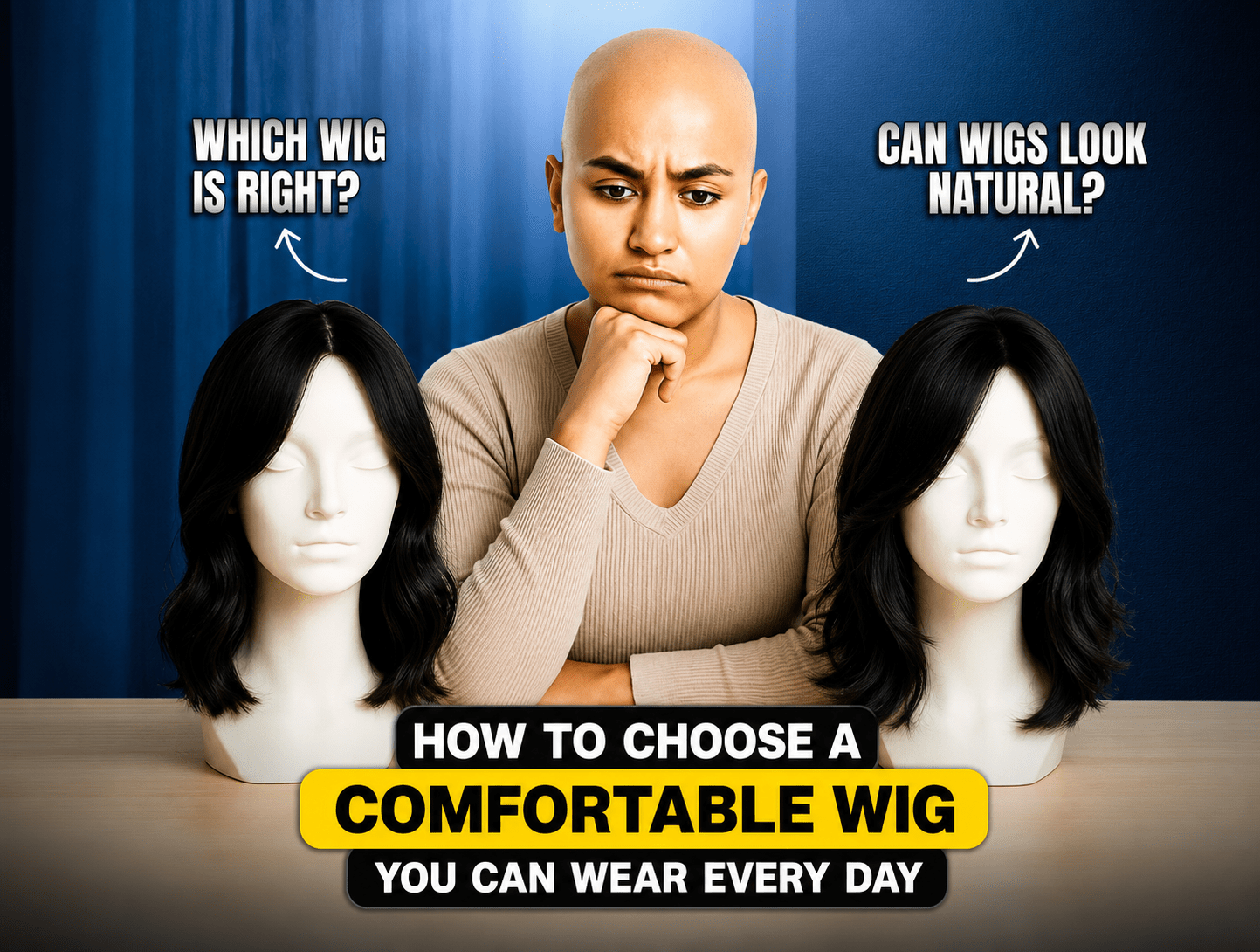
Hair loss during chemotherapy or radiation can be emotionally difficult. For many women, choosing a wig is not only about covering hair loss but also about maintaining confidence, privacy and a familiar appearance during treatment.
A wig may look natural but still feel uncomfortable after a few hours, especially on a sensitive scalp. The right everyday cancer wig should be lightweight, breathable, secure and easy to maintain, helping the wearer feel comfortable and confident throughout the day.
|
Table of Contents |
|
Why Comfort Matters |
|
Choosing the Right Wig Cap |
|
Finding the Correct Size and Fit |
|
Making a Wig Look Natural |
|
Human Hair vs Synthetic Wigs |
|
Choosing a Wig for Your Lifestyle |
|
Everyday Wig Buying Checklist |
Why Comfort Matters When Choosing an Everyday Cancer Wig
Most women first focus on the colour, length and hairline of the wig. While appearance matters, comfort is equally important when the wig needs to be worn for several hours. Cancer treatment can make the scalp sensitive, dry or tender, which may make a heavy or rough wig difficult to tolerate.
An uncomfortable wig may cause itching, sweating, pressure or headaches. A comfortable wig should allow the wearer to focus on work, travel, family gatherings or social events instead of constantly adjusting it.
A comfortable everyday wig should:
- Feel soft against the scalp
- Stay secure without feeling tight
- Allow airflow
- Feel lightweight
- Be easy to wear and remove
- Require simple maintenance
Before purchasing, wear the wig for at least 15 to 20 minutes. Walk around, turn your head and check for pressure near the forehead, ears or neck.
Choose the Right Wig Cap and Base Material
The wig cap sits directly against the scalp, making it one of the most important factors for comfort. Two wigs made with similar-quality hair can feel very different because of their cap construction.
Ask the consultant to show you the inside of the wig. Check the seams, straps, clips and areas that will touch your scalp. A lightweight and breathable base is usually more comfortable for daily wear, especially in warm and humid weather.
Look for:
- Soft edges
- Minimal bulky seams
- Flexible adjustment straps
- No sharp clips or rough material
- A lightweight base
A lace-front wig can create a softer and more natural-looking hairline. The lace should sit flat and should not scratch the skin.
Hand-tied wigs allow the hair to move more naturally, while a monofilament top creates the appearance of a real scalp around the parting. These features can improve the look, but comfort still depends on the overall fit and construction.
Before choosing, ask:
- Is the cap suitable for a sensitive scalp?
- Can the size be adjusted?
- Can a soft liner be worn underneath?
- How should the cap be cleaned?
- Can the base be altered if it causes pressure?
Find the Correct Wig Size and Secure Fit
A wig should stay secure without squeezing the head. A tight wig may cause headaches and pressure, while a loose wig may slide backwards or lift near the ears.
Wig sizes are often labelled petite, average or large, but proper head measurements are more reliable. Your size may also change slightly when natural hair falls or begins to grow back.
Important measurements include:
- Head circumference
- Front hairline to the nape
- Ear to ear
- Temple to temple
- Nape width
During the fitting, check the forehead, temples, ears, crown and neck. The wig should not leave deep marks, cause numbness or feel painful.
Security options may include adjustable straps, wig grips, soft silicone sections, medical-grade tape or a customized cap. Clips should only be used when there is enough healthy natural hair to hold them safely.
During the trial:
- Turn your head from side to side
- Look up and down
- Bend forward slightly
- Put on your glasses
- Walk around for a few minutes
The wig should remain stable without feeling painfully tight.
How to Make a Wig Look Natural
A natural appearance depends on the hairline, density, colour, texture, parting and haircut. Choosing 100% human hair wig does not automatically guarantee a natural result.
The front hairline is one of the most important details. Natural hairlines are not perfectly straight or equally dense. A realistic wig should have lighter density near the forehead and gradually become fuller behind the front.
A natural-looking hairline should have:
- Soft and gradual density
- Natural temple coverage
- A shape that suits the face
- A front edge that sits flat
- No thick, straight line
Very thick wigs may look impressive on a display but can appear unnatural during daily wear. Moderate density is often lighter, cooler and more realistic.
Colour should be checked in both daylight and indoor lighting. Photographs of the wearer’s previous hairstyle or a saved lock of hair can help with matching. The texture should also resemble the wearer’s original hair, whether straight, wavy, curly, fine or slightly coarse.
Even premium wigs may require customisation. Small changes such as face-framing layers, reduced volume or softer ends can make the wig suit the face better. The parting should also resemble a natural scalp and should not appear too dark or crowded.
Human Hair vs Synthetic Wigs: Which Is Better?
Both human hair wigs and synthetic wigs have advantages. The right choice depends on budget, lifestyle, maintenance preferences and how often the wig will be worn.
Factor |
100% Human Hair Wigs |
Synthetic Wigs |
Appearance |
Natural movement and texture | Premium fibres can also look realistic |
Styling |
Can usually be cut and restyled | Often comes in a fixed style |
Maintenance |
Requires regular care and restyling | Usually easier to maintain |
Humidity |
May react like natural hair | Often keeps its style better |
Heat styling |
Can generally be heat styled carefully | Only heat-friendly fibres can be styled |
Durability |
Can last longer with proper care |
May wear or frizz sooner |
Choose a Wig That Suits Your Lifestyle and Climate
A wig should work in everyday life, not only inside the showroom. Consider how long it will be worn, where it will be used and how much maintenance can realistically be managed during treatment.
Working women may need a wig that remains comfortable during travel, meetings and video calls. It should work well with glasses or earphones and should require minimal adjustment.
For professional use, look for:
- Lightweight construction
- A secure but gentle fit
- Natural density
- A manageable length
- Minimal styling needs
Women managing household work, errands or caregiving may prefer short wigs for women or shoulder-length styles. Shorter wigs can feel cooler, require less brushing and are easier to maintain.
For social occasions, check the wig from the front, sides, crown and back. Take photographs in daylight, indoor lighting and with flash, as a wig may look different in photos.
In warm and humid Indian cities, breathable construction is especially important. Consider:
- A breathable cap
- Moderate density
- A practical length
- Lightweight construction
- Simple washing instructions
When searching for “wigs near me,” “best wigs in Mumbai” or “luxury wigs online,” do not choose only by photographs. Look for proper measurements, private fitting, cap inspection, hairline customisation and clear aftercare support.
Everyday Wig Buying Checklist and Final Thoughts
Choosing a cancer wig can feel overwhelming, especially alongside medical appointments and treatment. A simple checklist can make it easier to compare different options.
Comfort and fit
- Does the cap feel soft?
- Is the wig lightweight and breathable?
- Does it remain comfortable after 20 minutes?
- Does it stay secure without feeling tight?
- Are there any rough seams or hard clips?
Natural appearance
- Does the hairline have gradual density?
- Does the parting resemble a natural scalp?
- Does the colour suit the skin tone?
- Is the density similar to the previous hair?
- Has the haircut been customised?
Maintenance and buying details
- Is the wig human hair or synthetic?
- How often should it be washed?
- Can it be maintained at home?
- Is customisation included?
- Are repairs or alterations available?
- Is there an exchange policy?
- Will care instructions be provided?
Hair often grows back after cancer treatment, but the timing, colour and texture may vary. The oncology team is the best source of guidance about what to expect based on the treatment being given.
Conclusion
The most comfortable wig is not necessarily the longest, thickest or most expensive option. The right wig should feel gentle against the scalp, stay secure without pressure and look natural enough to help the wearer feel confident.
For some women, the right choice may be a premium human hair wig customised to match their previous hairstyle. For others, it may be a lightweight synthetic wig that requires very little styling.
Take time to inspect the cap, check the hairline in daylight and wear the wig long enough to understand how it feels. The right wig should help the wearer look in the mirror and recognise herself again.
Take the first step toward confident hair today! 📞 +91 9967123333 Call us for a personalized consultation and discover the most effective solution for your hair needs.
You don’t have to figure this out alone.
Tell us a few details, and our caring experts will help you find the right wig for your comfort and confidence.
👉 [Fill out the form here.]
Read more

Permanent Extensions vs Clip-Ins: Which Is Better for Busy Women?
Between work, family and social commitments, spending extra time attaching and blending clip in extensions every morning may not feel practical. Clip ins offer instant volume with no long term comm...
Read more
Are You Falling for Marketing Hype Instead of Real Topper Quality?
Hair toppers can be an effective solution for women experiencing thinning around the parting, top or crown. They provide coverage and volume without requiring a full wig and can be worn daily or fo...
Read moreneed help?


Leave a comment
This site is protected by hCaptcha and the hCaptcha Privacy Policy and Terms of Service apply.